And I discover the world has turned upside down: I walk on water, stepping on clouds, as if levitating in a state of grace
— Julián Varsavsky, The Salt of the Andes.
.
The dessert, in its absence of the things of this world, manifests the presence of the next
—Rebecca Solnit, Savage Dreams.
My grandfather once told me a short story about his father, a farmer in what I later came to know as El Campo. This word means “countryside” in this context, and more plainly, “field” in many others, but for me it represented a specific place: my grandparents’ farm, in opposition to their house in town—la casa del pueblo. It was not until a few years later that I recalibrated my language to align with general usage, and then with the more abstract notions of the term in European sociology, a twenty-year process whose steps I now trace back. The story is rather simple, but it visibly describes a path—or a loop—that we have tried to widen, strengthen, and diversify by weaving other paths and traveling further, generation after generation. The origin, however, loosely remains the same.
Coming back to my grandfather and his father, this story places us at the Tenza Valley during the second quarter of the 20th century. The deep crevice that shapes the valley in the eastern thumb of the Colombian Andes (we call it Cordillera Oriental), has mostly preserved its beauty against the threat of progress and from our limited human sense of time. The pristine green of the mountains, their steepness, and soft and fertile soils could only be shaken, for many decades, by the sound waves of educational radio. But the impetus of developmentalism would eventually impose major changes in the landscape: first, they found the emeralds, which extended the deep green of the mountains into their bowels, and turned many hearts upside down. Later, through the 1970s and 80s, the Colombian government flooded the valley to create a massive lake and a dam for hydroelectric power, and about two decades ago, a stable road was finally built to overcome the persisting landslides during the rainy season. This road, like an intravenous route, is an open channel to insert and extract from the body at will, and that very will has largely determined the fate of this connection.
For some time, my great-grandfather and two of his friends traveled outside the valley to find salt. We are taught that humanity built its civilisation along the water, but it is just as true that it has prospered alongside salt. Ceramic pots from 4,000 years ago, found in small settlements along the Ganjig River in China, informed archeologists of ancient efforts to obtain salt cakes from river water. And further back, in the salt springs of Poiana Slatinei, in today’s Romania, there is similar evidence of efforts to boil brine from the springs. Salt, water, and fire are not only at the heart of what we call civilisation, but are also inevitably woven into the choreographies of our survival. My great-grandfather would take the road to sell some of the honey he produced at his farm and trade it for salt, in a round trip that would take him into the Bogotá Savanna: a vast elevated plain that shelters a constellation of townships divided between farming and industrial manufacturing, both lifelines for the voracious creature that is the city of Bogotá.
In his time, around the second quarter of the 20th century, the trip would be made on horseback and mule, stopping at strategic points to rest: first at the Suta Pass, just outside the town of Sutatenza, after clearing the rugged trails of the Tenza Valley. Then, continuing to the area of El Neme, near Machetá, a town that marks the transition between the eastern slope of the Cordillera Oriental and the contrasting yet equally massive landscape of the savanna. On the third day, the group would follow a circular route to Chocontá, a town that served as a regional distribution center, to unload the honey and head to Nemocón to purchase large salt blocks from the mine. They would stay the night back at El Neme before heading back through the same route to distribute the salt.
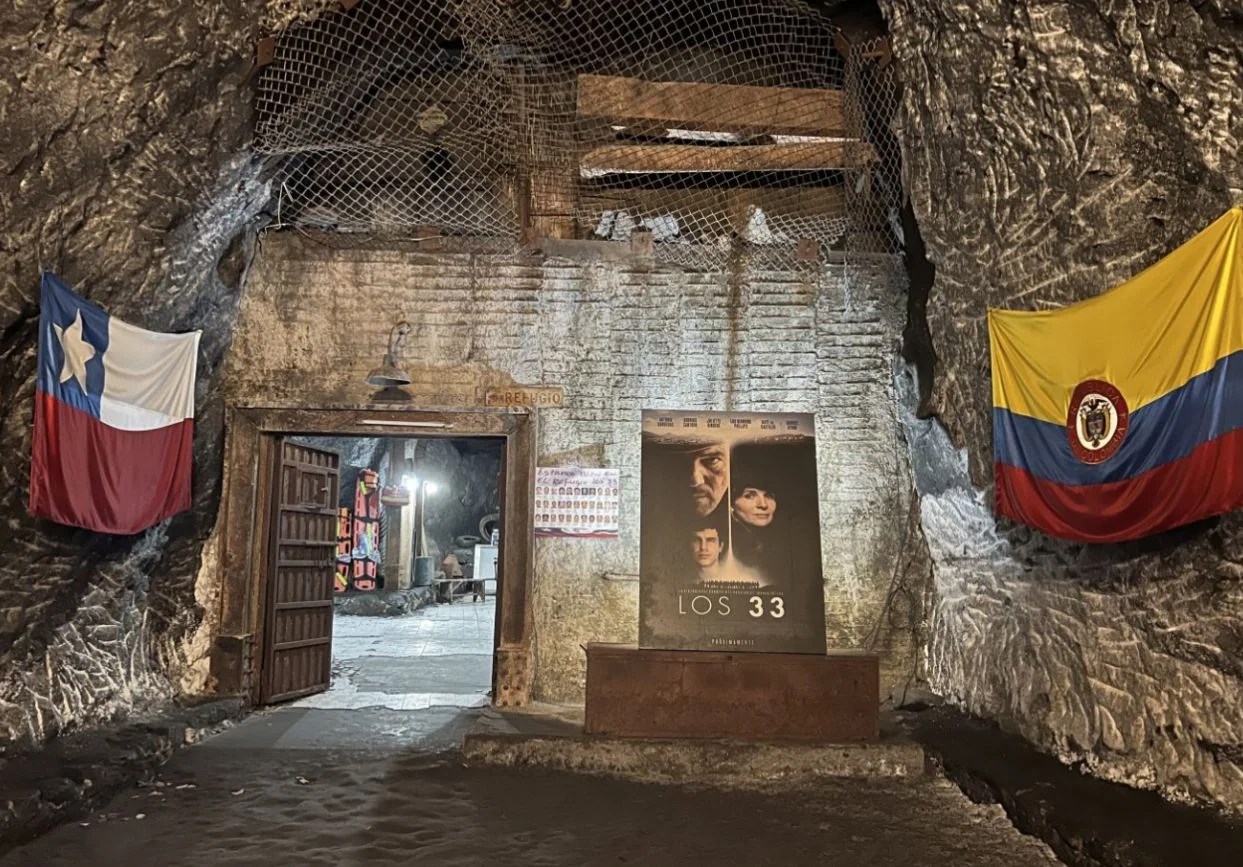
The mine in Nemocón ceased operations in 1968 and became a tourist site, featuring a museum, a chapel, and a small collection of scenography objects from the film Los 33, which was shot on location. It narrates the story of the entrapment of a group of miners in Copiapó, Chile, in the Atacama desert, but with the compelling aesthetic flair of European actors like Antonio Banderas and Juliette Binoche. The connection between distant Andean geographies will proliferate further in the following paragraphs.
I asked my grandfather if he knew why his father eventually stopped traveling for salt, but his response was a hesitant pause; his prodigious knowledge and memory, as exceptional as they still are, begin to show slight signs of discord. I imagine the reason to stop has something to do with human time and how the wounds of progress began to scar the soft tissues of life in the valley, as well as with the taxing physical effort of the journey. My grandfather himself would eventually rehearse his own circular path, moving into larger cities as he progressed in his studies, but always finding his way back to his hometown. Whenever my grandfather paused for too long in his answers, I hesitated to insist and waited instead for a new opportunity to recast that memory through soft persistence rather than eager repetition. Memory, like water or Earth’s atmosphere, is rarely accessed safely through blunt force; it requires a soft, angled approach to inhabit the threshold between the inside and the outside for a longer period, avoiding a violent attack on its hardened boundary.
Hesitation is also a predilection for soft limits and expanded time, a disposition that primes our consciousness to engage with the profound qualities of experience, otherwise obscured by the anxiety of an absolute answer or an efficient result. This idea bears an affinity to Simone Weil’s notion of attention, although my reflection does not pursue the ineffable “truth” of Western philosophy. For Weil, attention is a sort of “negative activity” (or perhaps an activity unfolding in negative space/negative time) that does not call us to advance relentlessly, but rather to lovingly hold, in the back of our minds, the tools and the possibility to acknowledge what is essential, what lies beyond.
In a later conversation, my grandfather added some details that amplified the image of his early life and brought back my own memories of the old sugar mill, formerly used to produce panela blocks (a form of unprocessed sugar cane with exceptional nurturing properties), widely found across Abya Yala. My brother later helped me cast a fuller picture: our rubber boots lined up at the entrance of the house, their size and style revealing their individual owners; the wood-burning stove, the smell of freshly cut grass for the stable, the pink blocks of salt that fed the cows, the old dogs chasing us up the mountain. And a quiet sense of peace.
The three-day route that took my great-grandfather and his friends to the salt mines of Nemocon mirrors the path followed by the travelers in The Salt of the Andes, a chronicle by Julian Varsavsky that illustrates the wayfaring life of the Kunza people from northern Argentina, through a journey to Uyuni, the largest salt flat on earth, in southern Bolivia. Their path followed the Qhapaq Ñan, a formidable network of Incan roads extending from Colombia to Chile and Argentina, which has been used uninterruptedly by numerous communities since the days of the former empire. The affinities between the northern and southern Andes also manifest in how life unfolds in the high-mountain ecosystems: the puna in the south is the territory of the llamero (or llama herder) peoples of Atacama, who lived in association with these camelid beings for five thousand years before the arrival of the white colonizer. In the north, the campesinos of the Andes are sustained by the slow-brewed richness of the paramos, the humid sanctuaries that promote the prosperity of the towns that dot the Colombian mountains.
Both ecosystems were profoundly misunderstood by Western colonial enterprises, which saw them as geographies of scarcity. The puna was quickly razed by colonizers and their horses, while the paramos remained, until recently, largely untouched. Perhaps it was the demanding weather of the paramos, alongside the lush, embracing ecosystems that surround them, that kept marauders away. In any case, the remarkable gift of both geographies and their communities, as Varsavsky reflects in relation to the “peoples of the salt”, is their ability to sustain a prosperous life through sensible management of what might otherwise seem insufficient for survival. I believe the greatest misconception about high-mountain ecosystems is the expectation that they align with our efficiency-oriented human times. Yet the lifespan of a human life and the event-centric consciousness of the “civilized” is too hasty to fully grasp the delicate sequences of life that transform a vague mist into an abundant spring, or their lack into an expansive desert.
In Nemocon, the salt lies between sediment layers in the mountains, signaling the presence of an ancient sea. The Andes were a relatively late geological formation, compared to the rest of the South American continental platform, and this process continues to unfold far beyond our lifetime. As we continue relentlessly devastating ocean ecosystems, the salt trapped inside the mountains becomes one of the last healthy reserves on the planet. Yet large-scale extraction, such as the processes used to obtain pink Himalayan salt, also results in heavy metal contamination. Even the salt mounds left exposed to the environment of a mine or an industrial space, even for a short period, have already been found to contain significant amounts of contamination. The supply chains we organize to respond to consumer frenzies are largely responsible for unsustainable exploitation of these environments, as well as for the toxicity that, alongside salt, cycles through our bloodstreams.
In Central Mexico, mountain salt reserves similar to Nemocon are thoughtfully harvested by traditional communities. Instead of industrial mining practices, they practice sustainable methods that rely on the sun and rain cycles, as well as the health of clay and soils, to obtain salt without causing environmental damage and preserving its mineral complexity and benefits. These practices have been around for hundreds—perhaps thousands—of years, and their survival might be connected to the relative anonymity and remoteness of these salt-harvesting communities. But because their craft crucially relies on environmental conditions, we participate in the undermining of the conditions that enable their millenary practice with no awareness of this fact. Interconnectedness, a defining quality of our universe, has long been understood by indigenous peoples. Since capitalism thrives in championing disconnection, we can only access this awareness through a spiritualized experience. The collective energy of the meditation retreat, or the mental journey of a psychedelic trip, is often packaged as an escape experience, so our awareness remains decontextualized as a metaphysical quest of the individual.
Entering the Nemocon site and arriving in the Salar de Uyuni must be radically opposing experiences. The mine in Colombia was likely a daunting environment for any worker: industrial mining is a gargantuan sacrifice of present and future lives—both human and non-human—impossibly justified as an “inevitable” offering to an imaginary general prosperity. In reality, it is artificially sustained through disconnection, distraction, and, in the cases of precious metals and stones, through intimidation, violence, and murder. A statue of the late miner “Chuy” Gomez installed on the Nemocon site reminds visitors of the daily struggles of mine workers a hundred years ago. Sometime in the late 1930s, Gomez famously carried a salt rock more than twice his weight from Nemocon to Bogotá, a 65 km walk that symbolized the extreme burden mining imposed on his and other bodies, as well as the vast disparity between the underpaid mine workers and the business owners back in the capital. The salt flats, on the other hand, are expansive, usually pristine white fields which, although precarious in their own ways, invite an entirely different somatic experience. The deeper we go into a salt flat, the more we lose track of spatial references, priming our senses for an unscripted encounter. At the center of this vastness, the bias inherent to our visual perspective is radically amplified: from where we are looking, we appear to be at the center of the world.
This reflection inevitably made me think of Iñigo Manglano-Ovalle’s work Juggernaut (2008), a single-channel video that equally challenges our perception. In this intense audiovisual piece, our gaze softly drifts over a white landscape, accompanied by the rumble of an indistinct machine. The pristine white field and scattered clouds invite us to think we’re looking through an airplane’s side window. Then, our mental image is suddenly ruptured by a massive wheel that crosses our line of vision: we have been transported from the air down to a salt flat, in a flickering movement that challenges our perception. It feels like coming to our senses, a metaphoric landing that reminds us of our tiny scale against the vastness of everything else.
The wheel’s rapid intrusion, the fast mental recalibration it demands, and the context in which we metaphorically set our feet, throw our assumptions into disarray. Juggernaut seems to remind us of the relative suspension of time in the salt flats, a world of possibility in the absence of physical structures or organizing patterns. In a way, the massive truck brings us back to the realization that, in the words of the Quechua nobleman Felipe Guaman Poma de Ayala, the world remains “upside down”. For Guaman Poma, who wrote an extensive missive to the Spanish kings to denounce the excesses and vices of colonial administrators, this expression illustrated the extreme disarray of the world wrought by Spanish colonization. Might the massive wheels that interrupt our meditation be hinting at an analogous critique?
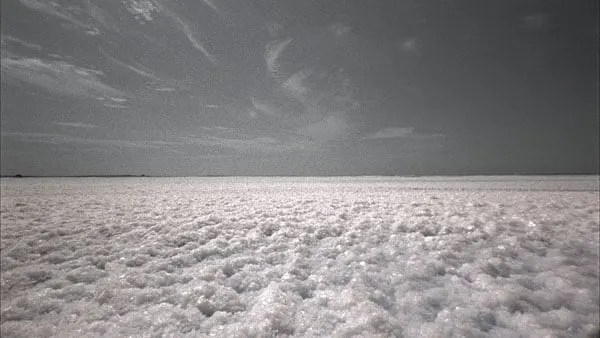

Iñigo Manglano Ovalle, Juggernaut, 2008 (film stills). Images: Galerie Thomas Schulte
In an art21 interview, Iñigo notes that his works are infused with a concrete politics, yet he ultimately refuses to reveal his position. I wonder what his underlying motivation might be: is he concerned that this revelation could undermine the work’s effect? Or perhaps this ambiguity grants him a comfortable circulation across different political spectrums, institutions, and sponsors? One can only speculate about his intentions, but what this relative yet calculated omission ultimately reveals is the appalling capture of the artist’s subjectivity by the professionalized art ecosystem: its imaginaries, its poetic modernist frameworks that demand mystery, intricacy, and other constructed signifiers of a profitable —and simultaneously palatable— individual genius. Some of Iñigo’s work, in my own interpretation, holds the potential to gesture toward radical transformation; yet it hesitates at the threshold of its own realization. And at this point, I can’t help but ask what remains for art if not the possibility of speaking its mind, not for aesthetic or intellectual effect, nor for commercial or professional gain. The present might be too important, too urgent.
A compelling example of this potential appears in Le Baiser (The Kiss), an audiovisual work in which Iñigo performs as a window cleaner at Mies van der Rohe’s Farnsworth House. The interior scenes are accompanied by an ambient soundtrack, a kind of vibration of an ethereal quality. But in fact, the track has an embedded, stretched, and reverberated sample from the band Kiss. The alternation between the diegetic sounds of the outside and the ambient sounds inside not only unsettles our expectations (a synthetic 80’s rock tune suddenly transformed into a flooding, spiritual resonance), but also instigates the mental experience of a time warp. We are required to shift our focus constantly, between the seemingly mundane sounds of the artist wiping the house’s glass exterior and the slowed, dilated temporality suggested by the indoor soundtrack.
Almost a hundred years ago, Werner Heisenberg introduced the Uncertainty Principle into quantum physics, relieving science from the responsibility to know, explain, and ultimately govern everything. The slow flickering sequence of Le Baiser reminds me of this: how focusing on one aspect of reality inevitably renders the rest of it fuzzy. And that quality —fuzziness— as a descriptor in quantum physics punctures the tyranny of rationality as the dominant force in our reality. In Íñigo’s work, the elasticity of time represented through reverberating sound manifests how hesitation can also serve as a descriptor for a kind of perceptual openness, a creative lingering that allows us to experience the “residual” life that remains tangled in the fuzz. In Physics and Philosophy, Heisenberg notes that Einstein hoped to find the same order of human rationality beneath the chaos of the quantum. He did not, however, consider the possibility that human science might have been drifting away from life, and that it was never the task of the quantum to accommodate our desires. Our compulsion to explain everything through our limited toolkit ignores the more complex facets of reality, because they seem incommensurable and tend to refute our anthropocentric view of the world. And this might be precisely what’s keeping us from experience and connection.

For some time, I embodied that same hesitation I find in Iñigo’s words, probably concerned with the astringency of my own language: how I might have fostered a form of communication that relied too much on efficiency while abandoning the possibility of connection to the whims of the encounter. So I eventually pivoted from the blunt force of radical political language to the circumspection of academic inquiry. Only recently have I realized that, like memory, connection also demands a sustained, angled approach—a lingering—in order to cultivate a language oriented not toward efficiency but toward possibility. Heisenberg was equally concerned with the relativity of language; in Physics and Philosophy, he also reflects on the difficulty of translating ideas between technical definitions into more accessible forms, and on how politics lie at the core of every human endeavor, even in disciplines governed by numerical rigor. This means we constantly develop abstractions from ideas to move them between our human realms and fit them into human agendas; this is a form of refinement that sheds much of the complexity of thought, always leaving behind scraps of context and nuance. However, it is precisely in what we consider residual that new life can prosper. I chose to remain at the fringes of disciplinary knowledge, using hesitation to nurture the prosperity of other thoughts, unbound by disciplinary demands or rational canon, and open to chance and to the metabolic rewards of hesitation. It is here where I’m finding, again, a new language, almost twenty years after I began calling myself an artist.
A couple of months ago, I was running along the River Thames to rest from the intensity of a work trip. Running is, for me, a tactic to escape a ruminant mind and go back into the body, as well as to enjoy a city when I’m only passing through. The previous day, I had paid a customary visit to Millais’ Ophelia, hanging in the permanent collection at Tate Britain. I’m not particularly drawn to painting, but I hold a kind of non-intellectual appreciation for this one, and I try to see it whenever I’m in London. I usually leave the museum unbothered by other exhibitions (I’m not fond of museum crowds, except in special cases). The next day, during my run, my stomach forced me to find a public toilet, and I unexpectedly found myself stepping back into the Tate. On my way out, I ran into an artistic commission by Hylozoic/Desires, a poet-musician duo that dove into the archives of the Indian Salt Hedge: a vast barrier built by British colonial rulers of India to prevent the smuggling of salt across the subcontinent. Stretching more than 4,000 kilometers, the hedge relied on natural barriers, such as rivers and cliffs, and, where the land offered no help, it was constructed from thorny plants like Indian plum. It remained alive and in place until the country declared its independence from colonial rule; but in fewer words, the Hedge meant, in order to maximize their salt profits, Britain decided to split India in half.
The centerpiece of their installation was The Hedge of Halomancy, a video projected onto an angled salt plane on the museum floor. The Hedge operates both as a poetic metaphor and as a biological index of the entangled relations that shaped the end of British imperial rule in India: more than an ingredient, salt had become a currency, and workers were often paid in mounds of it. In the video, Mayalee uses salt to practice salt halomancy (salt divination), and her findings filter through the ranks of the Hedge’s administration bodies, eventually contributing to the erosion of imperial rule in the region. At the dawn of the last revolution, Gandhi’s Great Salt March protested the British salt monopoly, promoting civil disobedience and ultimately becoming a landmark event for the Indian independence movement the following decade. Over its lifetime, the Hedge acquired a significant presence and agency in the life of the land and its peoples. First, it became the subject of complex bureaucracies; later, it was the target of repeated attacks by liberation movements. Ultimately, it became a template for European empires for post-imperial transitions, demonstrating how the fragmentation of formerly colonized territories could create new opportunities for subjection without the need for military occupation. Today, India remains the world’s third-largest producer of refined salt.

On opposite ends of the world, during the 1930s, racialized peoples were standing up to their white exploiters almost simultaneously: Chuy and his fellow miners in Colombia, and, 15,000 kilometers away, the Indian independence movement. Both enacted disobedience by moving large quantities of salt across a long distance, quietly revealing that physical separation enables inequity, exploitation, and environmental destruction. It is no coincidence that migration follows massive transfers of resources from the south to the north, or that the distance kept by power from exploited sites and peoples complicates the development of empathy, or a sense of consequence. These temporal and spatial markers echo Heisenberg’s realization about the limits of our knowledge: in a world too infatuated with images, we are at the mercy of what our field of vision narrates as reality. Yet, in fact, the somatic, interconnected experience that might help us apprehend the full consequences of our decisions becomes fuzzy at best, and like in scientific models, we are trained to ignore it. Here, hesitation becomes a way of inhabiting that fuzziness. It is the acknowledgement of our limited agency and an invitation to connect, pause, and dwell to experience what was otherwise obscured by separation and efficiency. In the Andean mountains, if we wish to go far, we must breathe deeply and walk slowly; and it is no coincidence that this gesture mirrors the mindful breathing and mindful walking of Buddhism, half a world away.
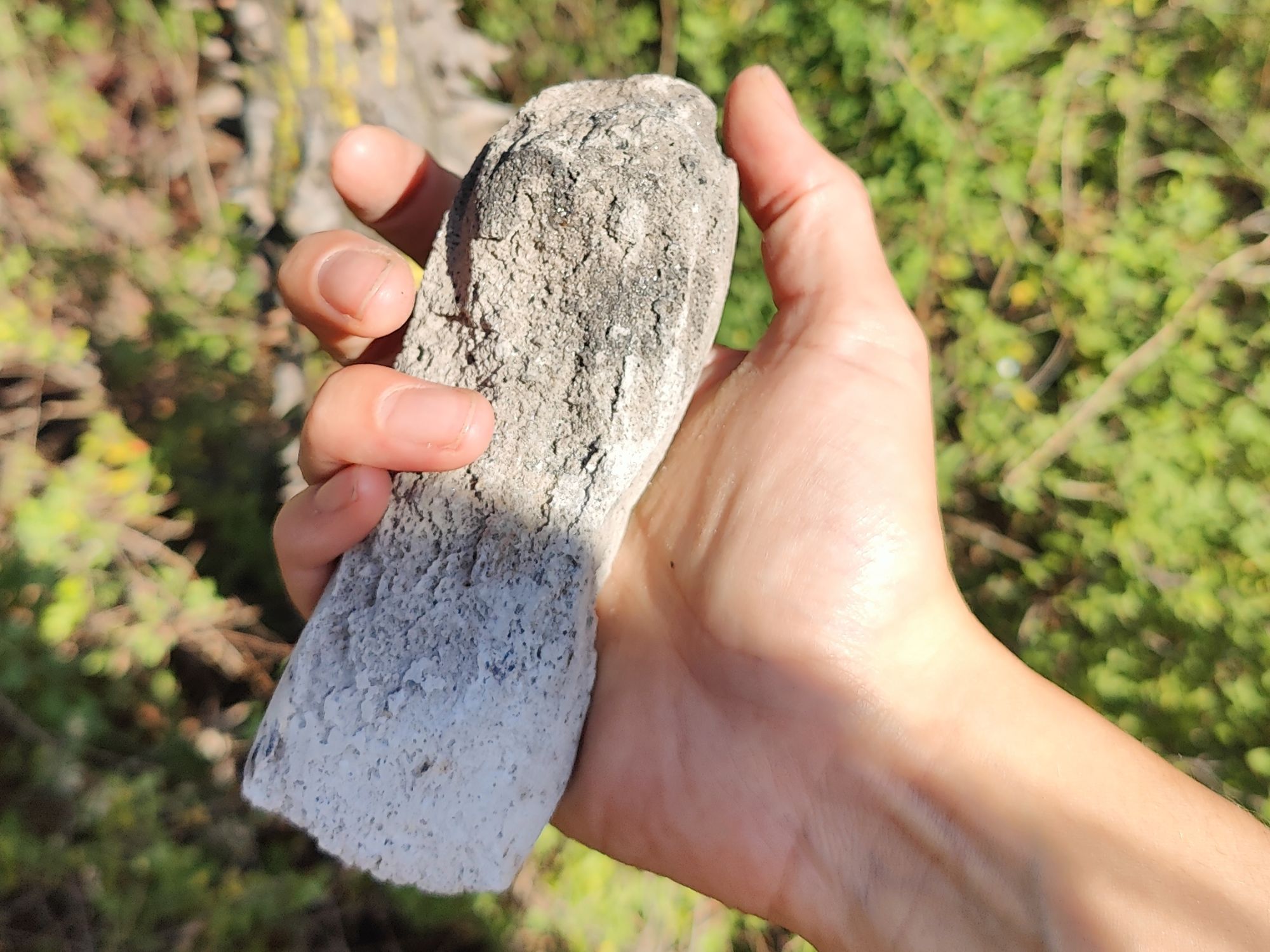
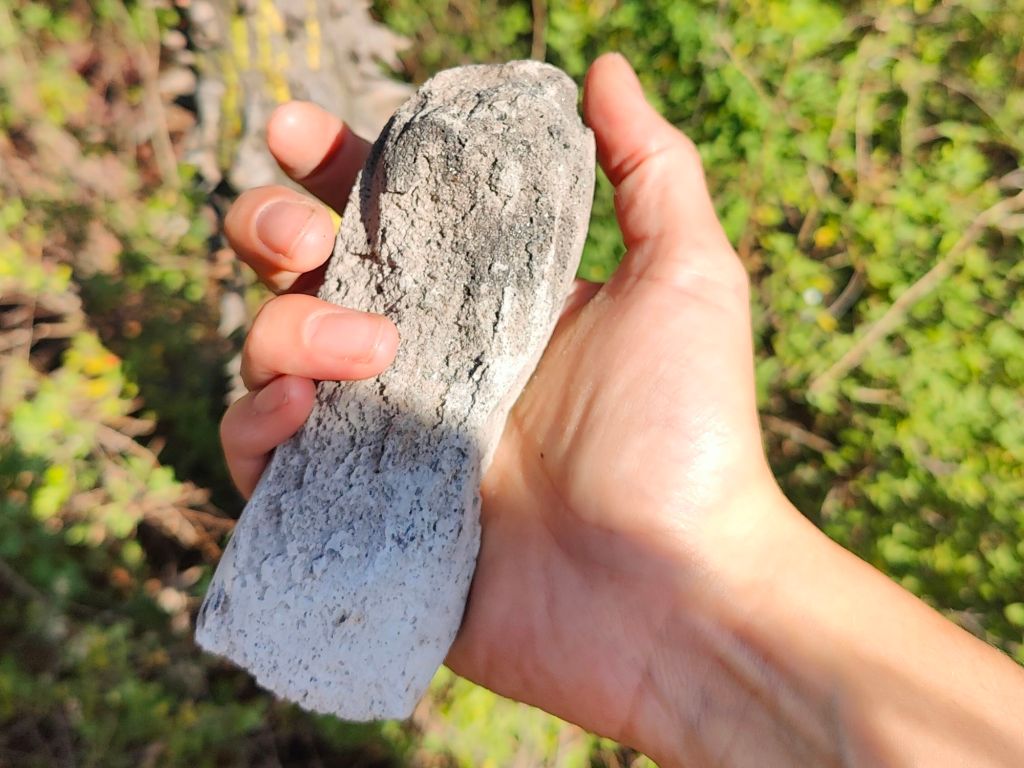
Salt, like coffee or bread, has been at the center of my migration stories. When I arrived in Mexico and began baking commercially, it became the defining ingredient in my bread: with so few components, flavor relied on the decisions made within an extremely narrow palette. Pink Himalayan salt was my first choice, but its suspicious ubiquity (sometimes even stacked in the aisles of T.J. Maxx) exposes the scale of its extraction. Later, as I learned about the mercury contamination afflicting many of its sources, I began looking for alternatives. A salt harvested from the Mar de Cortés in Baja California caught my attention for its remarkable depth and complexity. And also the one I identified as extracted through a sustainable process in Central Mexico. Unrefined marine salts not only elevate flavor but also carry a nutritional and mineral richness shaped by currents, sediments, and microbial life that is entirely absent in industrially produced varieties. Their complexity mirrors the larger universe from which they emerge: prosperity lies in entanglement, diversity, and simultaneity, not purity.
Like all crystalline matter, salts are ordered ionic lattices whose behavior is governed by quantum interactions. Their material process operates across scales and ultimately threads different orders of our world, from oceanic cycles to human metabolism. It binds geologies, histories, and migrations like the processes initiated by my great-grandfather, which I unconsciously began to amplify. I imagine the salt he brought back to his hometown as preserving such complexity, and perhaps even bearing information that, like the unwritten memories of my grandfather, demand a soft pace the world is more and more unwilling to offer. A hundred years later, intricate supply chains have transformed the process of obtaining non-industrial salt: now it is possible to go online and purchase directly from major or minor suppliers, or go to specialized markets in the city to find fleur de sal from Yucatan, or smoked salt bricks from Oaxaca, cooked inside corn husks to infuse the mineral with the distinct scents of the land.
I wonder if halomancy is still possible if most salt undergoes such a heavy processing. Unprocessed salts are also interesting in that regard: Because of the nature of salt, the complexity of the crystals and the entire mineral agglomerations it forms not only are infused with many qualities of its environments, but also offer the structural complexity of crystals. Industrial mining destroys this qualities, denying us the possibility of engaging with the complexities of our world. Eventually, I found our that Iñigo’s monumental video piece was shot at the Vizcaino Biosphere Reserve in Baja California, where Mitsubishi and their local mining partners obtain a significant share of their salt production. This is how one of my circular paths closed in Mexico, more than a decade after my encounter with the Spanish-Colombian artist and his work.
When I first migrated, I had to let go of many collections that had no real purpose; I put them together in the hopes of leaving a substance for my future self to work with, a future self tasked with creating meaning for that materiality. This is a common practice of artists, and perhaps of writers. Nowadays, since I have to move constantly, the only collections I keep are fragments of memories and untidy digital archives. Like my grandfather, I too struggle to reconstitute memories as the distances become larger, and it was a challenge to find texts about Iñigo’s work in the always eroding archives of the internet.
As destruction approaches Mar de Cortes, with impending promises of oil and natural gas drilling, and micro and nanoplastics filling the ocean, I wonder about the sustainability of broadening paths, but also about the ironies of moving around so much to find connections to the formative vignettes of my childhood, and to demystify the roads, the people and the places encountered throughout the journey. Like the people of Atacama, I too need to find meaning and purpose in our constant traveling, in a world where traveling simultaneously creates and destroys life. And like my grandfather, I too need to refine the shape of my path so it takes me home more often than not. Hesitation is also the somatic memory of the paths left behind, awoken through the practice of memory. I dream of arriving in Mar de Cortes before it is destroyed by corporate greed; but more often, I dream of going back to the old house in El Campo, with its gates marked with the name of my great grandmother, the old mill, the geese frantically running behind our truck, the smell of freshly cut grass, and the cows licking the large salt blocks.
I’ve found myself creating a new collection: when I travel, I keep the salt packets the airlines sometimes put in their meal trays, because I seldom use them. I know that airplane food is already extra salty, as our taste gets numbed at the high altitude of commercial flights. So I put the little envelopes in a pocket of my travel bag for a future (imaginary) use. Sometimes, I do the same with nutritional bars and tea bags from hotels, and they save my life when I least expect them. But salt just remains in my pocket silently, casting the possibility of a future encounter. I wonder if that salt, like the large mounds in Baja, also accumulates traces of my personal journey. Now I am the one who tells stories to my grandfather, and I silently treasure the memory of my ancestors. And I begin to warm up to Patricio Guzman’s words towards the end of his film Nostalgia for the Light: “each of us could carry the entire universe in the depths of our pockets.” I keep moving with the hope of always finding enough space to carry my own universe, and moving slowly —and hesitantly— enough so I don’t miss the sensorial wealth of the road.
.
[End of part III]
.
—David Ayala-Alfonso
New York, Salt Lake City, and Mexico City, November 2025
.
.
.
* Special thanks to Valentina Guerrero, Vanessa Sandoval, Nicola Masciandrano, and Juan Pablo Ayala, who accompanied and nurtured my efforts in writing this text, helped me bounce ideas, reminded me of details, and indulged me when I was chasing book references and special salts.
** Unless mentioned otherwise, images are my own.
.
.
.
Sequences of Hesitation, Part III © 2025 by David Ayala-Alfonso is licensed under Creative Commons Attribution-NonCommercial-ShareAlike 4.0 International


.
.
.
.

 a copy is a copy is a copy
You must be logged in to post a comment.