“In this so-called age of technicians, the only battles we know how to fight are battles against windmills.”
— Simone Weil, The Power of Words.
.
“We don’t need her, you and me can fly this thing Diane”
— Crew conversation overheard on the PA system, on Delta Flight 642, from Mexico City to Salt Lake City, on Nov 14, 2025.
In the days leading to the new year, I received an unusual number of video calls from my family: my cousin, then my mother, and my aunt. They all put me through to my grandfather in his hospital bed, each time attempting a different form of final farewell that reflected an ever-changing medical diagnosis. Although extremely eloquent, he used to be a quiet person, a master of pacing who knew precisely when to offer his wit. As for me, having chosen language as the vessel for my practice, words failed me. For the first time, silence became an enemy in my relationship with my grandfather, which had long been organised through quiet complicity. After his passing, which I had to experience, however reluctantly, at a distance, I was tasked with writing his elegy, which was in itself a race against time, but one supported by the way writing modulates our unfolding of thought.
I had been writing about hesitation for months and found myself confronted with this situation. I did not think of it as a hesitating moment, because nothing was being withheld from language; rather, time became the issue: video calls compress time, which in many cases contributes to efficiency. However, this is an unwanted consequence during an ineffable moment, such as the final transition of a loved one. I thought of Jerome Ellis, a disabled Grenadian-Jamaican-American composer, performer, and writer, who gave an eight-minute stuttering performance at the St. Mark’s Poetry Project in New York sometime before 2020. The event, which allows only two or three minutes per intervention, can feel like an ambush for someone with a speech disability. But Jerome’s performance, which I discovered through the podcast This American Life, was beyond brilliant. His success came from the poetic way he navigated language to convey, simultaneously, his condition, the disruptions of airwave-based communication, and how policy rarely—if ever—caters to the needs of disabled communities. My friend and former advisor Joseph Grigely has dedicated a substantial part of his artistic and political work to puncturing the stiffness of policy, culture, and social and institutional habits regarding disability.
JJJJJerome began writing his name in this way to visually convey the quality of his vocal enunciation. His 2021 album The Clearing weaves ambient musical compositions with spoken word, poetry and hip-hop verses, and delves into the phenomenology of language and the experience of dysfluency. He understands stuttering as an event unfolding both collectively (it only emerges in the interaction between speaker and listener) and individually, as a kind of tempo rubato. No matter how much he practices, stuttering can take place in different ways, create unforeseen interruptions, and is always related to the psycho-social contingencies of the moment: fear, comfort, proximity, familiarity, focus, etc. So every rendition of the same idea, poem, or lecture will inevitably be unique. In the fourth track of The Clearing, JJJJJerome calls a bookshop, and dysfluency appears at the moment he tries to name the title he is looking for. The prolonged pause is interpreted by the bookseller as an absence or a lapse in communication, and she hangs up the phone.
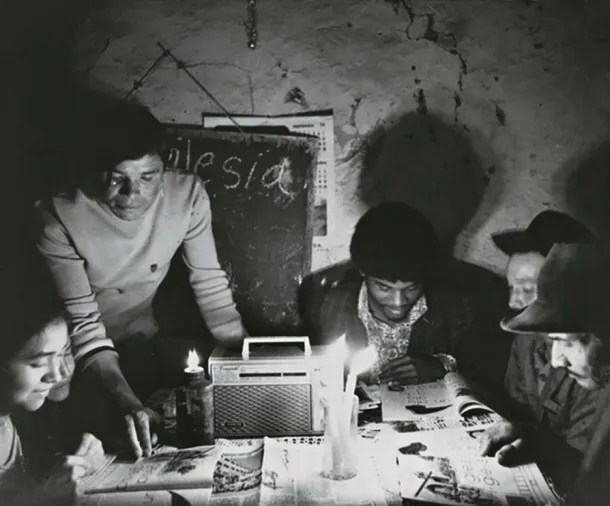
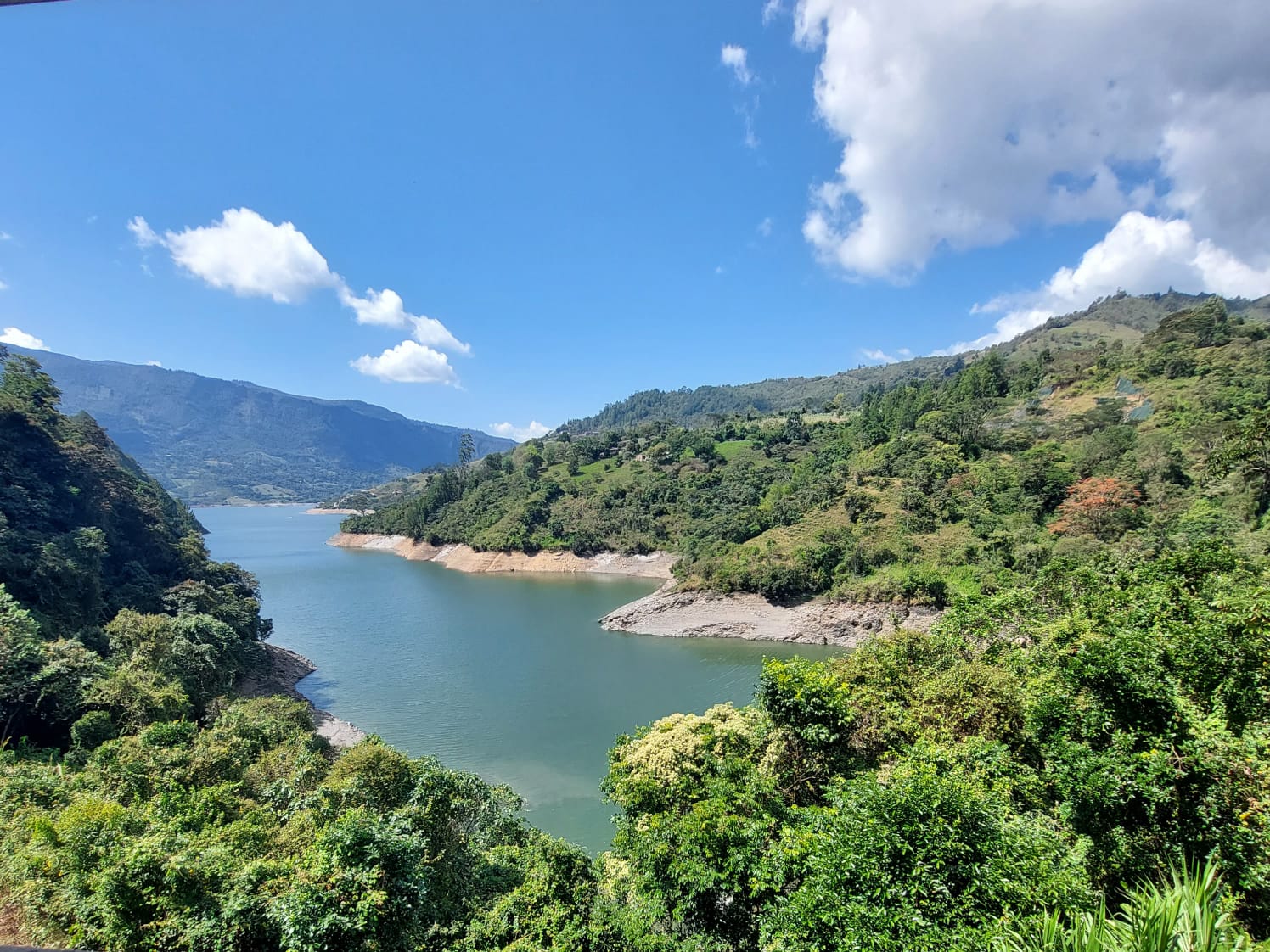
Before digital media, radio signals connected us to the world; like literature, they carried a sense of imagination that moving images can dislocate, and they projected a sense of timeliness that books could not. When I was a kid, I travelled with my grandfather from Bogota to his hometown, which took three hours some thirty years ago, but which now takes less than two. We would spend those hours quietly listening to the radio, allowing the acoustic landscapes to transform in conversation with the visual ones: first, the atomization of the urban space, the stretch of the long savanna dotted with dairy cattle; then the lakes, the bridges and tunnels, and the vanishing scent of the pine trees and eucalyptus. Finally, the valley and its mystifying beauty. The trip was experienced as the duration of tuning into a radio station, its signal fading away, then another station tenuously coming in, until the signal became perfectly clear. Upon arrival, a cut to the powerful stillness of the countryside.
At the farm, but also at home, I listened to the radio with my finger on the record button of my cassette player to catch a new favorite song, and I began exploring the shortwave bands when I discovered they carried signals from distant places. I listened to the news in French, from which I could only understand isolated words. I fantasized about the more tenuous signals that offered flickering bits of sound from unknown sources, and I mentally paired them with images of places in the travel booklets I found in my family home: Teotihuacán, Westminster Abbey, St. Peter’s Basilica, the Norwegian fjords. It would take decades for me to physically explore these sites, and radio felt like a connection to what otherwise seemed unreachable at the time. It, however, demanded patience in reception as well as an openness to the new, the arbitrary, and the possible. This suspension of certainty is a form of hesitation, opening experience to what is unbounded. The shift from shortwave radio to social media may have marked the slow annihilation of this possibility. But the communal, embodied feeling of shortwave radio is something to cherish.
Hesitation can be a practice of resistance against the overwhelming of our senses by the fragmentation of content and the micro-targeting of contemporary media. It is an active form of contemplation, a renunciation of fixed meanings and of the confirmation bias that sustains them. YouTube and Instagram are filled with videos promising the smoothest path to ending hesitation, which is presented as a kind of moral malaise by borrowing tropes from classical Japanese storytelling to disguise productivity advice as wisdom. They rehearse the misleading trope of poverty as moral failure, which has historically enabled exploitation and abuse around the world. In Western corporate culture, hesitation appears as a lack of efficiency, a flaw in a system that aligns morality with productivity. As Silvia Federici would have it, in this system the ideal human is, in fact, a worker, one who understands freedom as the internalization of compliance. It is someone whose time was once hijacked, but who is now “proud to own a watch”—or a smartphone.
In a different light, the Islamic Hadith Qudsi describes a kind of “Divine hesitation,” as a contemplation of the fate of the other; it is not born out of uncertainty or lack of power, but quite the opposite: it is an attribute of mercy and divine compassion. Along the same lines, the word Zann (ظَنّ) in Arabic refers to an opinion or conjecture, and it denotes a state between doubt and uncertainty. It is both a moral and a cognitive space that shapes our conduct. Here, hesitation is not a personality flaw, but in fact, a fundamental quality: it is an ethical space for the development of character and virtue. In contrast, a lack of hesitation could mean depriving oneself from the possibility of discernment, making us vulnerable to the tyranny of dogma, mindless repetition, or irreflexive compliance. And this lack of criticality can prove fatal, in many cases.
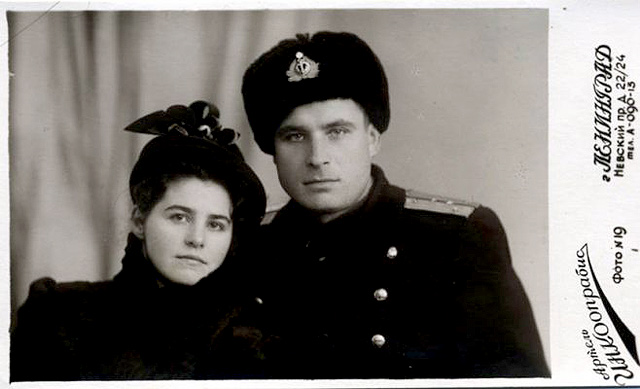
The story of Vasily Arkhipov, a vice-admiral in the Soviet Navy during the 1960s, beautifully illustrates this difference: as one of three commanding officers onboard a B-59 submarine, in the context of the Cuban Missile Crisis, he prevented the launch of a nuclear torpedo against the USS Randolph. This attack would likely have triggered a Third World War scenario with an 11-kiloton nuclear torpedo comparable to the bomb deployed over Hiroshima by the US twenty-four years earlier. Arkhipov’s intervention is famously narrated as a decisive “Niet!” (No!) that stopped the crew from loading the torpedo into the firing chamber. However, it took him a persuasive, angular approach to defuse the stress of his commanding officer, Captain Savitsky, navigating the psychological state of a dehydrated and nervous crew enduring the provocation of multiple anti-submarine charges from the US Navy. Amid the confusion, and lacking radio contact with the mission’s commanding officer, Arkhipov tried to make sense of the explosions and concluded that the submarine was not under attack but being pressured to disengage. His decision to surface rather than retaliate introduced an interval into a situation that seemed to demand immediate action, and that interval spared the world from nuclear catastrophe.
While history is often narrated as a collection of decisive charges and heroic operations performed by impetuous heroes, the actions of Vasily Arkhipov remind us that pause and reflection, not military fervour, kept humanity alive during the height of the arms race in the 20th century. In his book Bergsonism, Deleuze sees hesitation as a manifestation of time itself, the interval through which a generative future immanently becomes possible in the present, in contrast to the idea of time as a spatial dimension with a constant linear trajectory. Hesitation expresses indetermination and openness, offering us the possibility of building a future. This was perhaps Arkhipov’s gift to humanity: Mutual Assured Destruction in the Cold War (with its fitting acronym, MAD) was not then an inevitability, but a choice, and one that could be chosen against, through the introduction of a silence in the score of war. Hesitation becomes the interval in which life is not a continuous drift, but rather a construction through the patient creation of its possibility.
In The Space of Literature, Maurice Blanchot provides a befitting image of the impatient impetus that drives these historical forces. When analysing The Castle, Kafka’s final, unfinished novel, Blanchot characterizes the protagonist’s relentless pursuit of resolution as his greatest fault. To dive incessantly into failure, not for the desire of pure striving but out of an impatient demand for closure, produces movement but not purpose. For Blanchot, it is precisely this impatience that creates the illusion of approaching one’s goals. Yet staging a perceived resolution further keeps us away from the goal itself. The choreographies of the Cold War follow this fraught logic, announcing the perpetual precipitation into a nuclear conflict that never happened—and still claimed innumerable lives in proxy conflicts in the Global South—while allowing the US and the USSR to justify their military buildup beyond reason, practicality, or urgency. Blanchot interprets Kafka’s reluctance to rush into a conclusion, and even further his reluctance to publish unfinished works, as an effort to prevent impatience from overwhelming the true message of his writings, some of which required a further manifestation of life, an extended duration that never came to be. Kafka asked his friend Max Brod to burn all his unfinished manuscripts upon his death, but he did not comply. Brod was, perhaps, too impatient.
Blanchot’s reflection on the demand for resolution might help explain my apparent block when I received those video calls to say goodbye to my grandfather, why his articulations were effortless in the absence of time, and mine were obfuscated in the abundance of it. Digital communications lack the embodied experience of sharing a silence as a form of intimacy, or the physicality to offer a gesture that exceeds language: a glance, touch, an embrace, or simply company. Where spoken or written languages carry the heavy burden of precision and eloquence, the somatic is often liberated to offer a quality of communication unbound by fixed grammar. I believe that, had we been in the same room, these intervals themselves, and the palpable trepidations of my body, would have conveyed my true message: a feeling beyond definite words, tangled in the fuzziness of the pixelated image and severed by the edges of the screen. JJJJJerome talks about the opacity inherent in dysfluency when his audience or interlocutor is not physically present in the same space: while the bookseller awaits an answer, she is not able to see JJJJJerome’s striving. Not only the intervals between words but also his embodied effort convey the intention and emotion behind them. Silence is never empty.
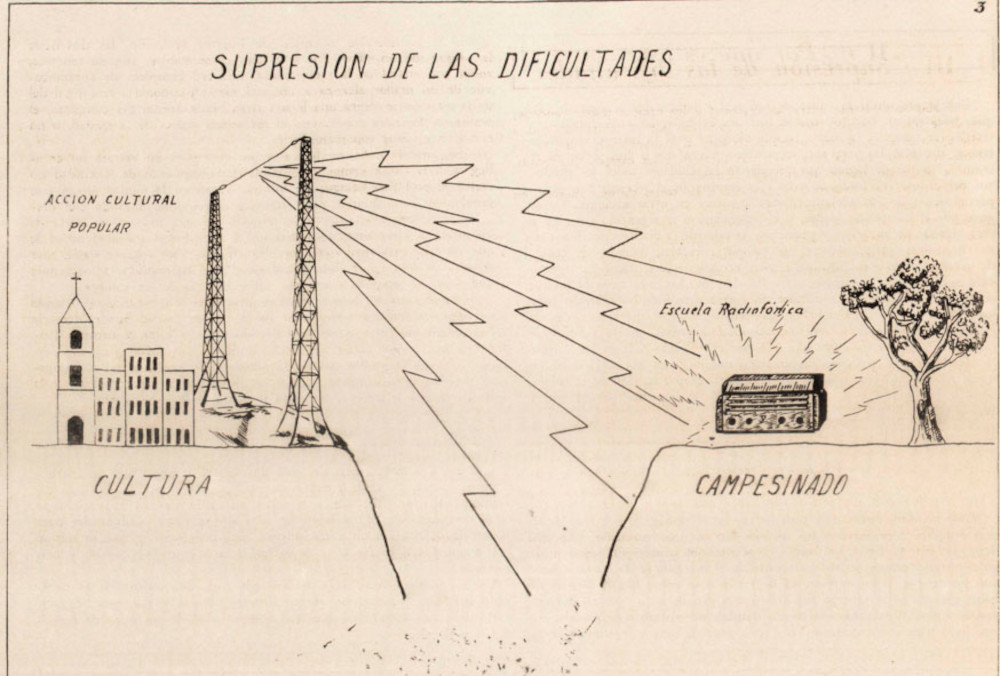
In 1948, General Electric donated two radio receivers and two antennas to Father Jose Joaquin Salcedo Guarin, a recently ordained Catholic priest who started what would become the first rural radio schools in Colombia the previous year. This experiment led to the establishment of Radio Sutatenza, the first large-scale rural educational radio network in the country. It began with a coverage radius of 100 km in a broken landscape, and by 1968, its reach went beyond national borders, serving areas of all neighboring countries. By the time it disappeared, millions of people in farming communities had received literacy, technical, and vocational training through its shortwave signal. I remember the tune of their radio commercials, as part of the soundscape of my childhood, when we spent time at my grandfather’s hometown. Its last transmission took place in 1994, and Acción Cultural Popular (ACPO), the organization born out of this remarkable pedagogical experiment, found other ways to further serve and stay relevant among the farming communities.
Also in 1994, the Zapatista Army of National Liberation took control of multiple radio stations in the southern Mexican state of Chiapas to broadcast the First Declaration of the Lacandon Jungle, as a prelude to their armed insurrection. The text invoked Article 39 of the Mexican Constitution, calling for the deposition of the then president, Carlos Salinas de Gortari, mentioned in the declaration as having taken power illegally. In 2020, as the Zapatistas were preparing to convene the Fifth National Indigenous Congress in Chiapas, half a world away, in Bethlehem, Palestine, Radio Alhara was emerging as an online platform for international solidarity and awareness, in response to forced evictions and the escalating violence of Israeli occupation. These three examples of radio usage by racialised, oppressed, and neglected communities exemplify the emergence of distributed listening bodies gathered through their shared desire for self-determination. In this way, they interrupted the control over media narratives exercised by forces that had either oppressed or forgotten them, and whose communication strategies had long rendered them largely invisible.
Most of these examples encapsulate defining sequences of our time: the height of the Cold War, the struggle for Palestinian liberation, and the milestone insurrection of the Zapatistas; these last two have become a model for a grassroots politics that relies on decentralised organization, international solidarity and, most importantly, a sense of duration that overwhelms the geopolitics of the systems of oppression. It is precisely this condition of otherness and the refusal to submit to the efficiencies of capital and control systems that creates a space for political imagination, identity, and self-determination. And it is not fortuitous that many influential artists who have joined these causes also participate in the struggle for equality. All struggles are connected.
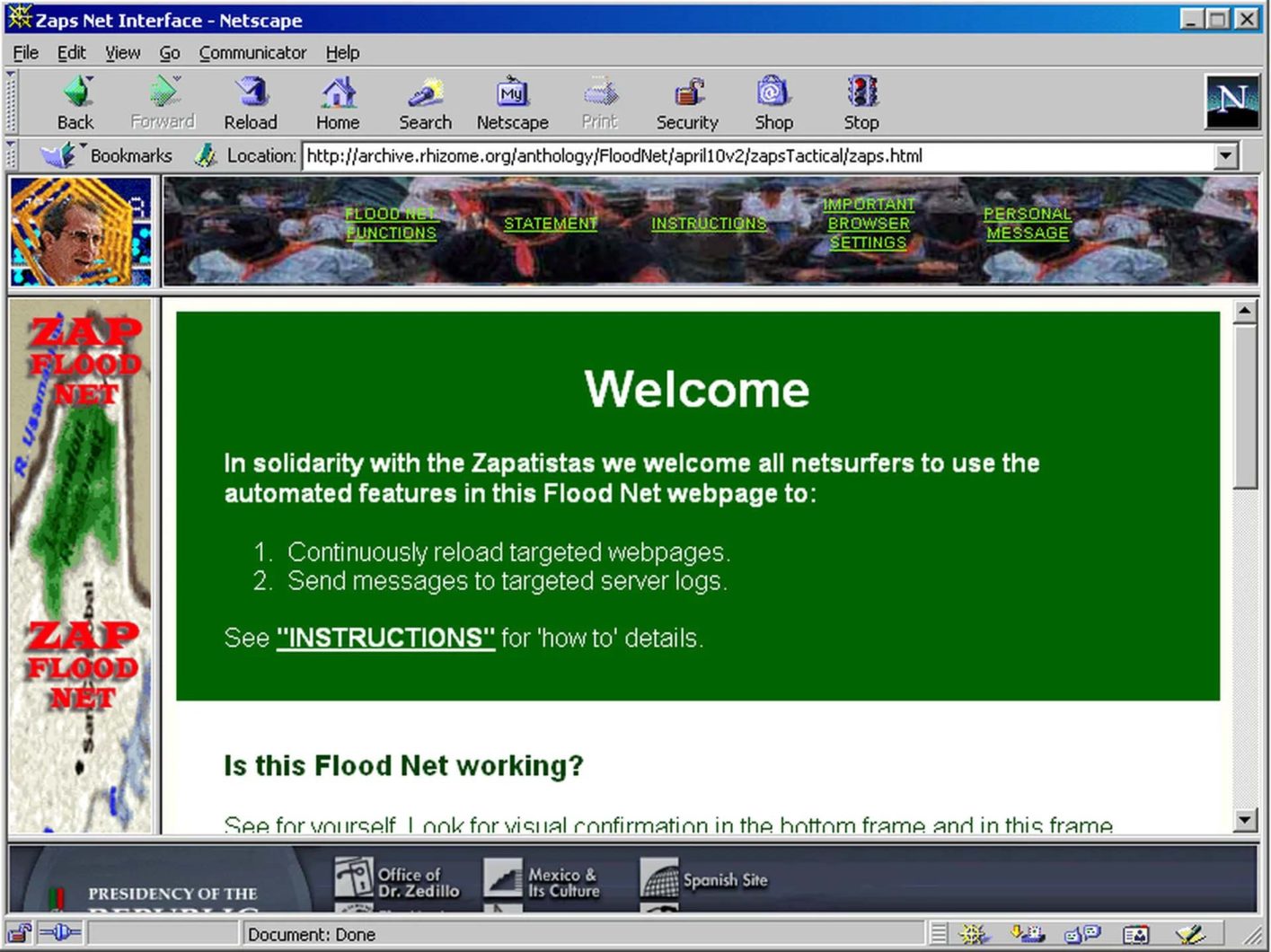
For example, Electronic Disturbance Theater (EDT) created FloodNet, an applet to “occupy” the digital space of the Mexican government in a peaceful protest that halted its public communication infrastructure. This initiative came as a response to the violent attacks by the government on Zapatista ranks and sympathisers between 1994 and 1998. EDT’s work has a strong emphasis on queerness, transrealism, and decolonial queer politics, in this way sharing a struggle for self-determination with the Zapatistas. Analogously, printmaker and Black Panther Minister of Culture Emory Douglas participated in several artistic and political actions in solidarity with Palestine, whose struggle he saw as associated with the experience of oppression of Black peoples in the US and the Western world in general.
The solidarity networks behind these movements not only create interruptions in the timelines of capital, but they also understand that their struggle demands a different timeline altogether. In a world of efficiency, patience and disruption become weapons for the liberation of the oppressed. But this awareness demands a repositioning that is unavailable to those who witness the unfolding of life through the distant lens of comfort: the imagination involved in fostering a politics of meaningful transformation, as well as in creating meaningful artistic expression, is inextricably linked to experiences of oppression, but also of solidarity, mutual acknowledgement, and resilience. It is only from outside the ranks of privilege that disruption and mobilisation shift from an abstract, optional concept to an internalised moral obligation.
Hesitation is a virtue of thought that only emerges away from privilege. Because of this, for the privileged, understanding the need for a vital connection to a sense of humanity and societal transformation is, by definition, an impossibility. The experience of displacement—the overcoming of one’s own centrality—is what allows us to arrive at hesitation. It implies an affective gaze, a meaningful touch, and a form of connection that proliferates in/as an alliance with an-other who substantiates one’s own humanity, belonging, and coexistence. The quality of connection I suggest is powerfully condensed in a phrase by Teju Cole, which is itself a rendition of a broader thought (a belonging). In his book Black Paper, Writing in a Dark Time, Cole remarks: “To paraphrase Édouard Glissant, when we regard each other, we should tremble.” At the loss of centrality we find the nature of our interconnected existence, and it is then that we turn our gaze in full attention and acknowledgement. Devoid of this quality of experience—a trembling—expressions like art, however bold, monumental, or intricate as they might be, simply become lavishly narrated, smooth-surfaced, neutralized commodities.
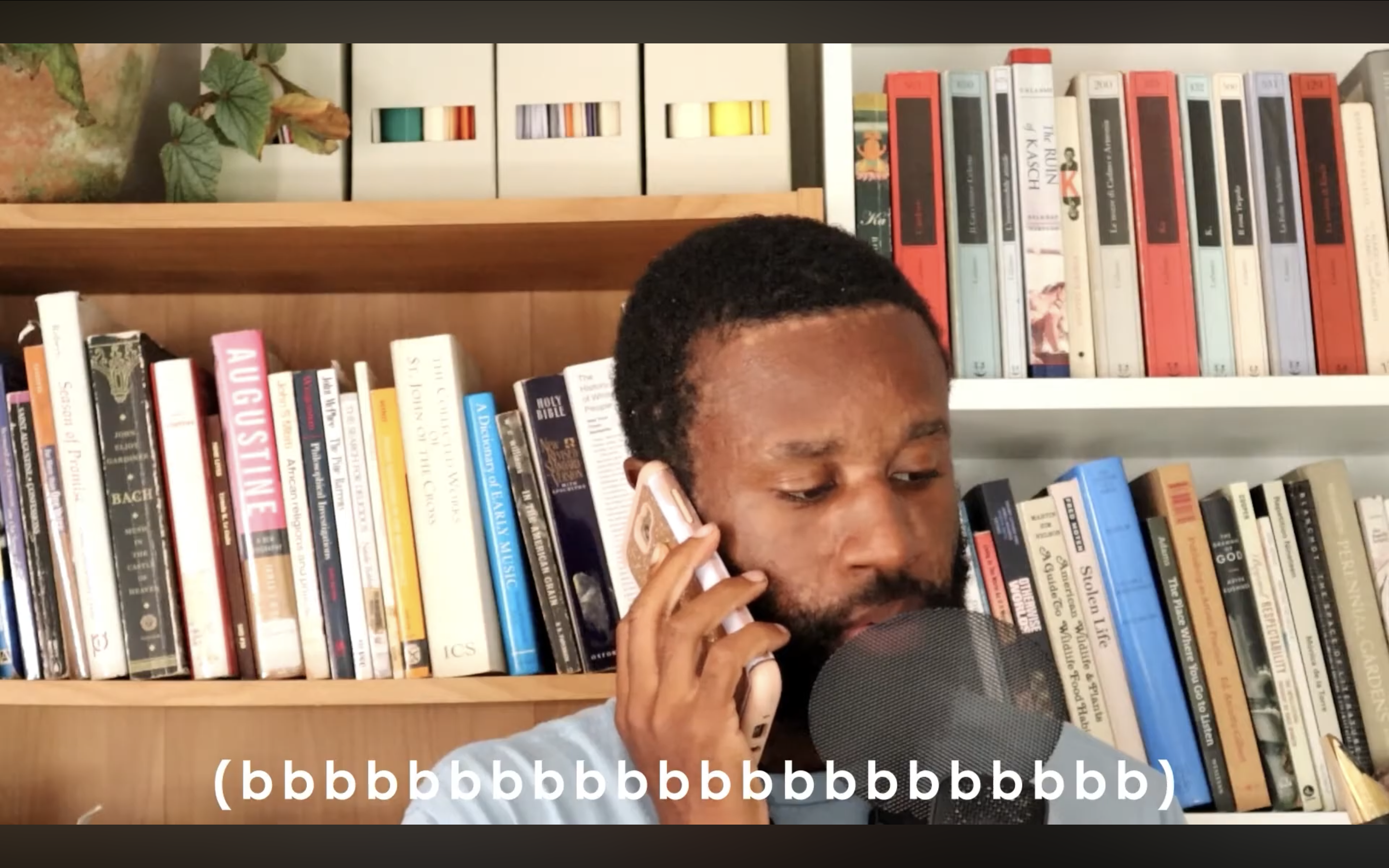
Two phrases by JJJJJerome in The Clearing captured my imagination: one was an explanation of the difference between a glottal block and a glottal stop. A glottal stop takes place when we intentionally obstruct airflow to produce a consonant sound, like in “uh-oh.” Instead, a glottal block is the involuntary folding of the vocal chords that causes a form of stuttering—the one experienced by JJJJJerome. On the connection of hesitation and stammering, Anne Carson wrote:
The English verb “to hesitate” comes from the Latin verb haesitare, “to stick fast,” also used of people who stammer. To hesitate is to hold yourself fast/ still/in place on the brink of time; to stammer is to hold a sound fast by repeating it, as if that might also repeat the present moment.
(Carson, 2023)
Carson, who delivered a talk on hesitation at the Museo del Prado in 2023, suggested that it is precisely in these temporal breaks that we experience the awareness of our relationship with time. Such a fragmentation led to her insightful monologue on Goya’s dog and hesitation, since the mural appears to be missing a pivotal detail that was probably cut from an edge of the mural in the process of its removal from La Quinta del Sordo, or its eventual restoration at the museum. Some of the vignettes in her presentation appear to be less about efficiency and more about experience, duration, and effect: the Duke of Wellington’s love for dogs, or Napoleon’s difficult relationship with his wife’s dog, are not strictly necessary information, but they are essential to the poetic and intellectual resonance of Carson’s musings on the concept of hesitation. Creating such a latency in the unfolding of ideas or their resolution expands the present moment, allowing the audience to pause and process, while holding their thoughts, a sticking to the subject. This effect can also be achieved by introducing long silences before and after an utterance, as a way of highlighting, a resource that my grandfather expertly maneuvered; in JJJJJerome’s case, these intervals introduce contingency, emphasis, and duration, in both his creative and expressive processes.
The other phrase by JJJJJerome that stuck with me was something to the effect of, “I think of everything I do (as an artist) as a form of healing.” When I was younger, I used to strongly oppose, even condescend to, the presentation of this notion. That was, until I understood what it meant. I can’t help but think of how much moral apathy is, again, related to comfort, as it so happens with abled, white-looking, cisgender, normative bodies, wealthy individuals, or those not burdened by trauma or hardship. When I think of my own experience of being subjected to severe financial and emotional abuse in recent years, JJJJJerome’s words remind me that healing is also a responsibility to an-other: one must become the interval itself, against the ripple effects of violence and its further projection into others.
Hesitation is the latency that enables us to break the cycles of oppression and abuse, a wandering that dismantles the perceived inevitability of reproducing conflict. Daoist wu wei (an effortless wandering) beautifully illustrates how this latency defuses resistance and creates a tendency towards harmony. When wandering, it is possible to contemplate the analytical indeterminacy that sometimes nurtures our desires to respond to the violence. This is why, for Daoist thinkers, like Lao Tzu, hesitation is an inherent condition for the wisdom of the sages of old, and for Zhuangzi, that same hesitation is a necessary prelude to finding our virtue. I recognise here the wisdom carried by the silences of my ancestors, not empty, but plentiful with care and possibility. Where ego might see inaction, hesitation finds generativity. Just like in Carson’s spiralling desire to amplify the image of the dog, JJJJJerome’s striving creates an ecosystem of great possibility and a richness of meaning that does not exist otherwise. Where famed historical speakers like Demosthenes of Athens followed a normalising approach for addressing their stammering, JJJJJerome took a path much closer to Dao, embracing his own nature, not perceived as a limitation, but rather as the eminent manifestation of the self: he integrated the qualities of his speech to create the distinct flow and sound of his art, his music and ideas.
In 2005, Kenneth Goldsmith created The Weather, a poetic transcription of radio weather reports from New York City interleaved with military weather reports from Iraq during the second invasion of the US. For a New Yorker, the interval created by introducing weather information from a place half a world away might seem confusing and fortuitous; however, Goldsmith’s piece establishes a mental and an emotional connection between the two sites: a sandstorm might mean adverse conditions for American troops on the ground, while a clear sky might open the possibility for an efficient airstrike. A person walking in the New York spring might not be burdened with a sandstorm, but will perhaps be reminded that, in their perceived beauty, clear skies can conceal the possibility of great disaster. In the same way, someone listening to Goldsmith’s The Weather might have been reminded of a loved one who was serving in the army at the time, perhaps guarded from harm by the taxing weather of the Persian Gulf.
The interval created by the artist in the flow of the everyday produces an awareness that seldom takes place in the unremitting pace of modern, cardinal time. Neuroscience views these interruptions as fundamental for information processing, self-referential thought, and, especially, the unfocused, generative thought that we call creativity. I believe I developed a disposition for patience, stillness and imagination while listening to the radio, and lost most of it somewhere during my late adoption of smartphones and social media. But while newer memories sometimes become fleeting images, words and sounds that briefly visit my mind, the somatic memories of the road of my childhood have stayed with me with remarkable clarity. These visual, olfactory and acoustic bonds to my grandparents live in my memory in a Bergsonian totality that only now actualises through the mourning and silence that came with their departure. The vitality of these memories is palpable every time an aural or visual stimulus crosses me, in the form of a distant bolero, the familiar humidity of the mountains, or the presence of those images that in my thirties started to spill out of the leaflets of my past. And every pause in mourning becomes nothing but an emphasis.
A couple of summers ago, I was wandering through the halls of a museum before entering one of the exhibitions at the ground level, when I was surprised by the voices of the Queer Choir of Mexico City, performing for a different event on the upper level. The resonance created by the museum’s central dome served as an amplifier for the dozens of singers, linearly arranged around a circular balcony. A year after the passing of my grandmother, her image was beginning to feel less like a void and more as a companion. But at that moment, at the museum’s rotunda, I was shaken by the growing intensity of the choir. Unlike my grandfather’s, her voice was a constant presence, and so was the sound of her portable radio filling the atmosphere. As the choir’s tune intensified, I could recognise the lyrics of Amor Eterno, one of my grandmother’s favourite songs, an elegiac bolero which, in the summer of her passing, had begun speaking to me about her. When the choir’s voices reached me I fell immediately. And I found myself at a loss, because never before had a song toppled me in such a way. And in the interval between these two immense losses, I still couldn’t gather my words. Instead, they remained in my mind, like orphans to time.
.
[End of Part IV]
.
—David Ayala-Alfonso.
Mexico City, March 2026
.
.
.
.
* Unless mentioned otherwise, images are my own.
.
.
.
Sequences of Hesitation, Part IV © 2026 by David Ayala-Alfonso is licensed under Creative Commons Attribution-NonCommercial-ShareAlike 4.0 International


.
.
.
.

 a copy is a copy is a copy
You must be logged in to post a comment.