.
“Any attempt to erase memory is always incomplete; it [inevitably] finds a way to resurface. Remembering is a political act.”
— Silvia Rivera Cusicanqui.
.
“But don’t tell no lie about me and I won’t tell truths about you.”
— Kendrick Lamar, Euphoria.
The national postal service in Mexico, but also in Colombia and elsewhere, works in a way, as an act of faith: whenever I travel, I’d like to send a postcard to a friend or a loved one, and the time it takes to arrive at them (if it ever arrives) is probably ten times the duration of my trip. After three months, I might receive a thank-you note, completely oblivious to my having sent my own greetings earlier. One time, I ordered a book from Berlin that took about three months to reach Mexico, and because the person who received it refused a physical handover to avoid passing COVID to the postman (offering a bag instead), the postal service decided to send the book from my door all the way back to Germany. That interruption, however, intensified my curiosity for the book, which the distributor kindly sent through different arrangements when they learned about this absurd interaction. National postal services are now a prey to the voracity of right-wing governments that are dramatically defunding these institutions, a spoliation that is supposed to perform as proof of the crisis of the commons and the alleged convenience of privatising state services.
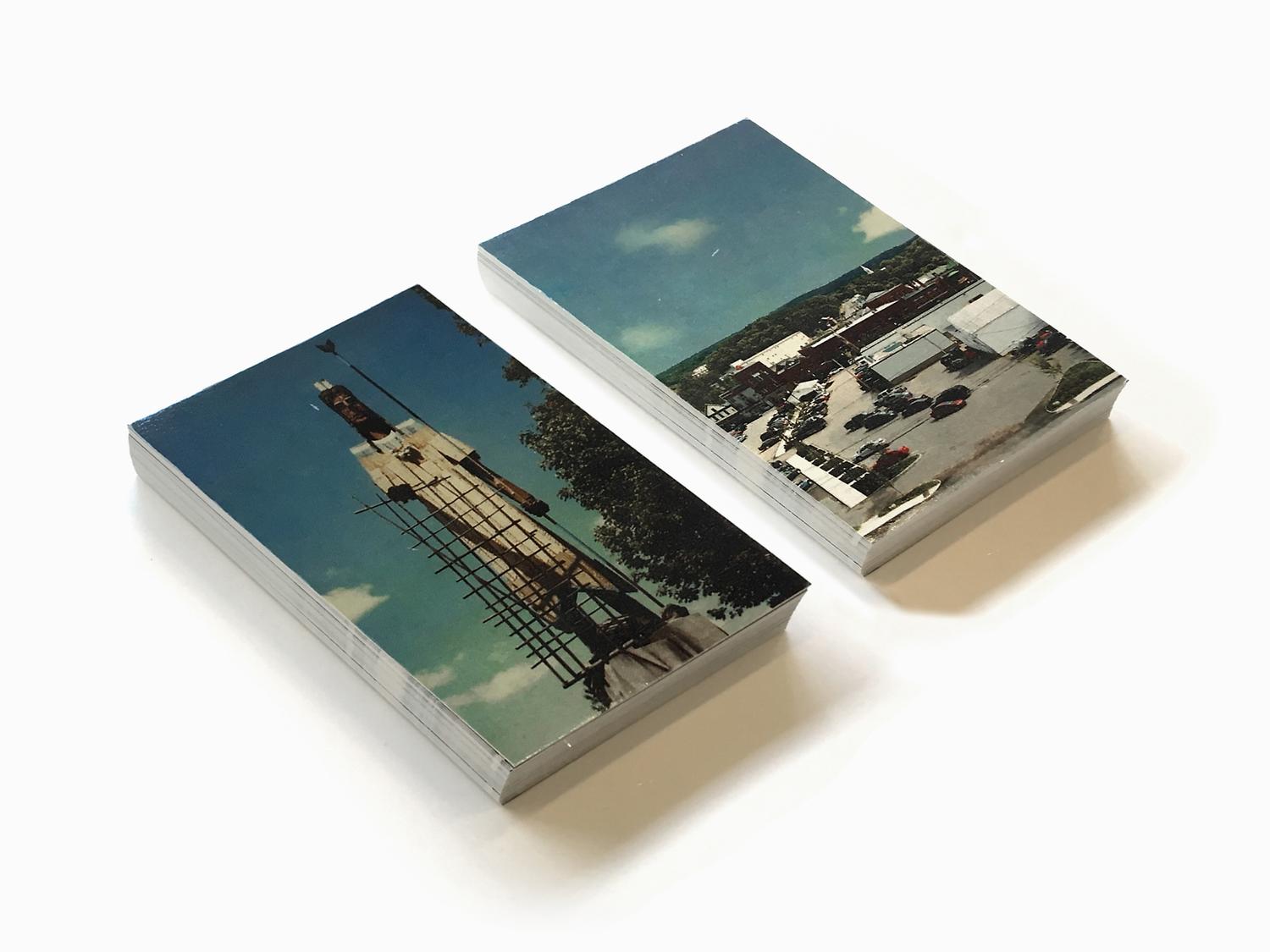
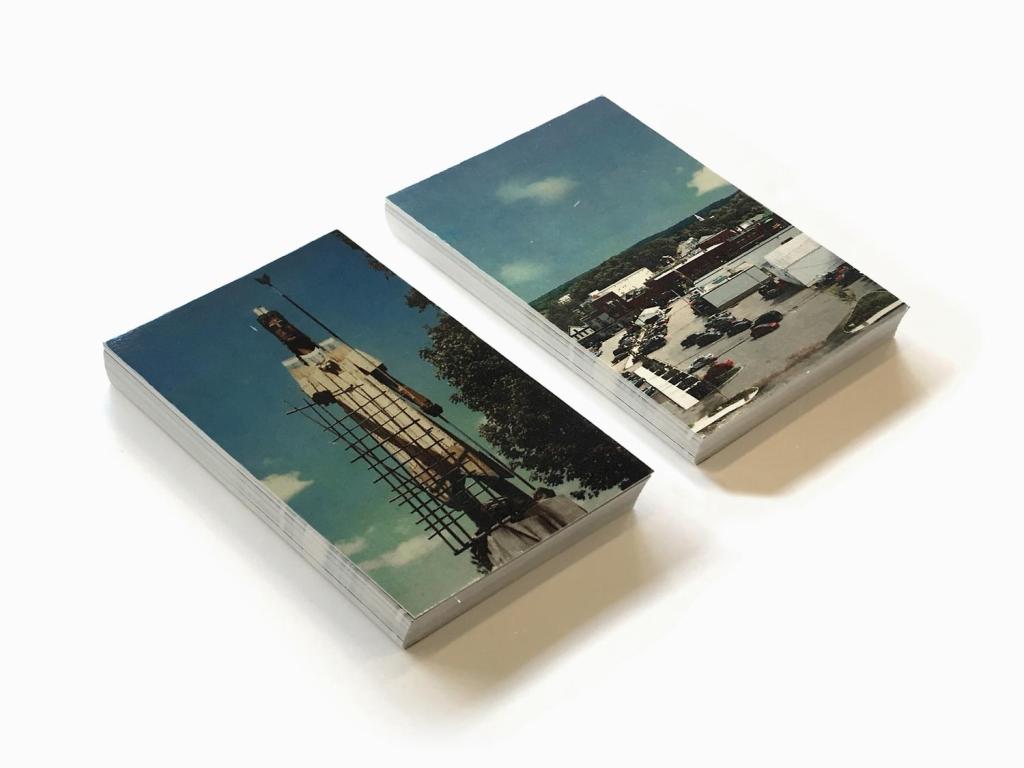
While I write some of these lines, a new postcard will be sent from Athens to my house in Mexico City; it comes from the artist Felipe Steinberg, who joined me on a trip to Minneapolis a couple of weeks ago to wrap up the five-year tour of my travelling exhibition on critical heritage, spoliation, colonial trafficking of fauna and florae, and the ideological and epistemic structures that sustain these procedures. Felipe, a dear friend and longtime collaborator, created the postcard as a simple but remarkable artistic gesture: it is meant to replace the official postcard of Skowhegan, Maine, a small town in the northeastern United States crossed by the Kennebec River, and a home to a prestigious, career-boosting artistic residency.
The official postcard shows a sculpture called Skowhegan Indian, a 62-foot wooden depiction of an Abenaki fisherman created by Bernard Langlais in 1969 overlooking downtown Skowhegan. The Abenaki were the people who named the area Skowhegan, which translates to “the place to watch for fish”, looking into the then pristine waters of the Kennebec to hunt the salmon swimming upstream. The Abenaki have been historically decimated by smallpox brought by the English and the Italian colonisers in the 1600s and by white territorial expansion ever since; today they subsist as part of the Wabanaki Confederacy, living between Quebec and the northeastern US states of Vermont, Maine and New Hampshire.
It’s probably been a long time since the Abenakis last looked over the waters at Skowhegan to catch fish; I reflect on this while Felipe narrates the origin of his work, as we sit at a bar crowded with UMinnesota students, the night before we would take the stage in a public panel at the university museum. As an alternative to the official postcard image, he decided to hire a scaffolding to reach the statue’s line of sight and take a picture from its perspective. The new picture captures some red-brick and white-walled buildings and a line of mountains on the horizon, but mostly a rather unremarkable parking lot.
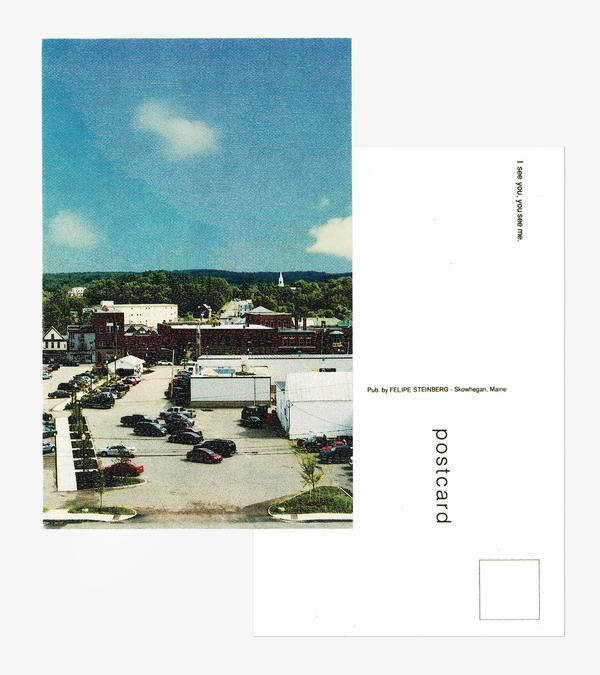
The logistical complexity of taking the new picture aside, Felipe’s gesture is simple and modest, but at the same time, extremely meaningful, as it reveals what I consider to be the greatest pitfall of contemporary artistic discourse: artists and curators have become speculative ontologists, 18th-century-style science enthusiasts, impromptu mycologists, makeshift spiritual beings, and unlicensed anthropologists. They have imagined the thoughts of plants and rocks, appropriated indigenous aesthetics, and developed a linguistic repertoire to stretch modern epistemologies beyond their shelf life. But one thing that international art (and perhaps science too) has consistently refused to do is, notably, to acknowledge the crucial precedence, inherent sustainability, and radical urgency of those perspectives highlighted by Felipe’s poetic action, in the face of societal and ecological catastrophe. The work is provisionally titled I see you, you see me, but being as aware of the arrogance of our contemporary artistic ethos (the title does not hold true), Felipe compels me to help him find a different, more suitable name.
This work embraces hesitation by inserting its artistic and philosophical statement into the unpredictable metabolism of international postal infrastructures. Instead of performing a public, controlled rendition of the idea (a more obvious choice in our anxiety-ridden present), Felipe decides to let it unfold through the evanescent trajectories of written, physical mail. The emotional and somatic experience associated with receiving a postcard not only sets the images and the words deeper into our memory, but it also enables what is now a rare form of interaction with images. A postcard remains with us, unlike other artistic ephemera, and decorates our house or workspace, or becomes part of our personal archive; we have a haptic, olfactory and tactile experience of it, and the duration of this interaction dramatically overwhelms the fugacious transit of the image through our screens. Hesitation is the expansive duration of experience that emerges when we drift from the transactional nature of our everyday interaction with digital images.
Bernard Langlais died in 1977, without seeing his work become the centrepiece of a park that was never built. Instead, businesses gradually occupied the area, eventually blocking the view of the sculpture from the road. Facing the challenging weather of the northeastern United States, the deteriorating Skowhegan Indian has been restored multiple times, but the costs of its maintenance have increased dramatically. Some fragments of its face and one of its hands have gone missing: theories about their fate include vandalism, wind damage, or its wood being salvaged for unknown reasons. Meanwhile, the Abenakis have mostly moved west and north and continue adapting to a rapidly changing world, pushing against its hard boundaries to make space for the vitality of their way of life. The town of Skowhegan is now searching for a benefactor to help cover the estimated $100,000 required for the sculpture’s restoration.
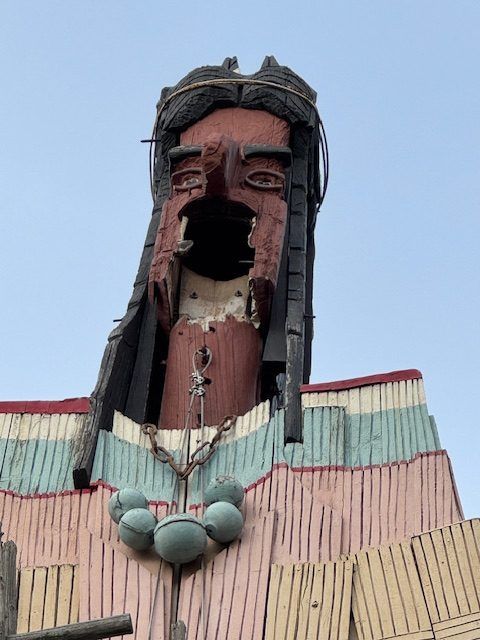
I find the image of the rotting Skowhegan Indian losing its parts to be extremely captivating, because it condenses two critical reflections of our time. On the one hand, the arrested materiality of the representation reminds me of the absurdity of the colonial gaze: the vaguely defined “indian” not only pays a false tribute to a culture that is displaced and not disappeared, but it also becomes a heritage object artificially frozen in time as a relic, constituting more of a conservation nightmare than a celebration. The increasing costs of repairing the statue mirror the exponentially growing expenses of maintaining Western museums that host massive amounts of looted heritage. Located in former imperial centres, these museums simultaneously represent cause and consequence: they are the protectors of an eroding heritage and at the same time a testimony to the erosion caused by the very ethos that brought such museums to life. The production of the cultural fragment implies the destruction of the culture to which it is a reference, all in a single action.
On the other hand, the sculpture is a testimony to the limits of edifying cultural capital by spoliation and to the relationships between heritage, time, desire, and decay. The gesture of accumulating heritage objects seems to be equally a desire for possessing the object and an aversion to the culture it represents. In his account of the possibility of pillaging the Sesostris obelisk, the French naval officer Raymond-Jean-Baptiste de Verninac appealed to the greater excitement shown by French people about what Europe considered antiquity, to justify the removal of artifacts from their intended emplacement. But inevitably paired with this expression of desire is his utter repulsion for the “savage ignorance” of the peoples of Southest Asia and North Africa in the same sentence.
In a Western military style, the relationship with heritage is established by De Verignac as an issue of radical antagonism: there is no place for enjoying ancient Egyptian material cultures, neither in their intended context, nor in a way that preserves the self-determination of the racialised peoples who are heirs to this material wealth. Fed by a narrow, one-dimensional perspective, the result of this sustained procedure of extracting culture from a place and accumulating it in another is, naturally, an erosion that neither fully replenishes a culture nor destroys the other. Instead, the result is a deep fragmentation of the cultural lineages of the colonised: in the same way ruins remain stacked against the emergence of the present, the disruptions of history persist in relation to the effervescent manifestation of culture in the everyday. The Bolivian sociologist René Zavaleta described this condition as abigarramiento, a mottled layering of times that describes the material and cultural landscapes of the colonised in their continuing quest for self-determination. It is also a coexistence of seemingly disparate periods, like multiple pasts and presents woven in the complex construction of the now.
.
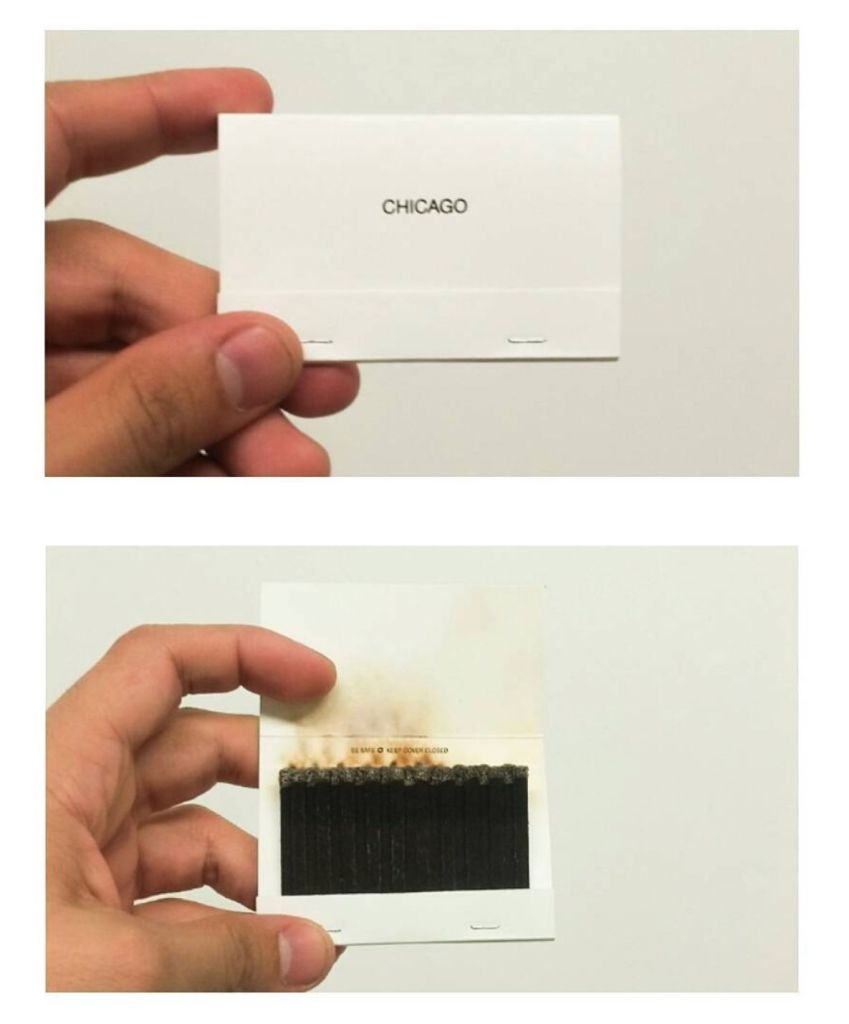
I first met Felipe twelve years ago, and was captivated by the wit of one of his early works: a small paper matchbox with all the match heads burnt and smudged against the interior, its white cover simply labelled “Chicago”. In its modesty, this work carried the monumental idea that the stylish verticality that characterises the city today must be remembered as having been built on top and as a product of its own ashes: the Great Chicago Fire of 1871 destroyed more than 17,000 structures in the centre of the city, and triggered the redevelopment of the area as a functional architectural playground in the following years. Its rebuilding efforts were significantly powered by the population of European architects escaping the horrors of World War 2 and of temporary Mexican construction workers filling in for drafted Chicagoans, in its own way, a form of spoliation narrated otherwise. Felipe’s gesture contained multiple vectors pointing in all of these directions, in a burnt matchbox that I could easily hold in the palm of my hand.
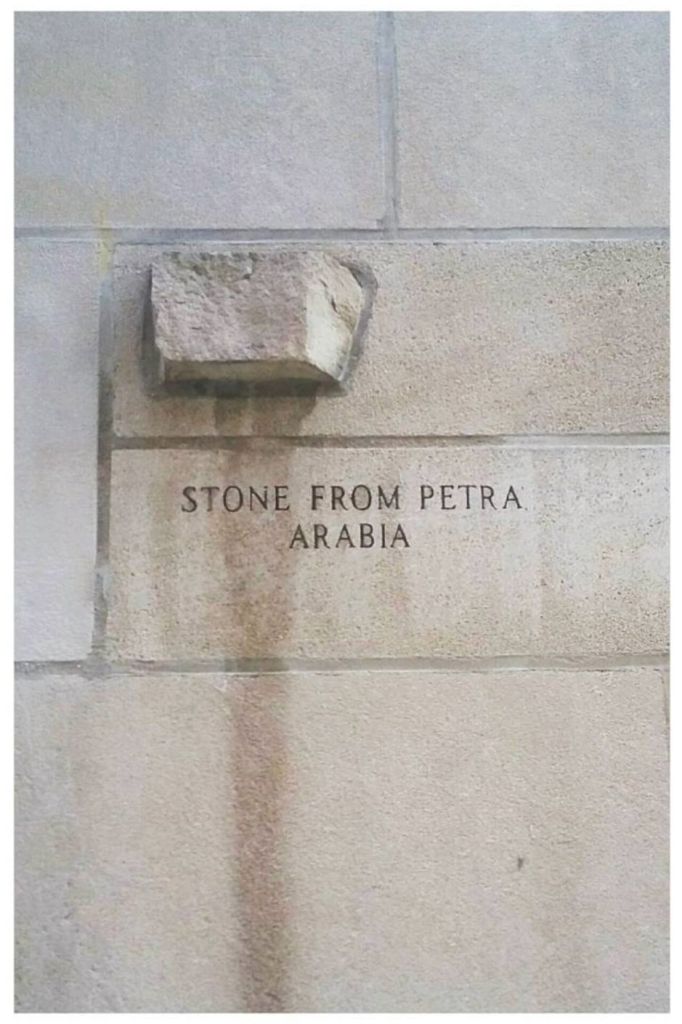
When I arrived in Chicago, one of the first images that captured my imagination was that of the Tribune Tower, a postmodern Gothic revival building located in the historic district of Michigan-Wacker in the downtown area. My interest in this eclectic piece of Western architecture comes from a conspicuous feature of its base: it is decorated with more than 150 fragments taken from historical buildings from around the world, from the Great Pyramid of Giza to St. Peter’s Basilica, and even a scrap of metal from the World Trade Center in New York, destroyed in 2001. This practice, known as spolia, dates back to the Ancient Roman Empire and before; some of its most notorious examples are the Arch of Constantine, featuring pieces of architecture from earlier dynasties, and St. Peter’s Basilica itself, which contains repurposed materials from the Roman Colosseum. The three structures—the Arch, the Basilica, and the Tower—narrate a trajectory articulated as the connection between the industrial power of the 20th century United States and a mythical past, seemingly attempting to justify the numerous procedures of wealth transfer (spoliation) that enabled the concentration of capital materialised in the Michigan–Wacker Historical District.
.
The practice of spoliation seems to exist in opposition to abigarramiento, represented by the eroded landscapes of the Global South, as well as in the architectural cover-up of land theft in historical Palestine. The continuous transfer of wealth and resources that have contributed to the fictional longevity of Western cultures is part of a broader phenomenon described by the Andean concept of Pachakuti. Bolivian thinker and educator Silvia Rivera Cusicanqui describes it as a process of deep accumulation that contrasts with the more historiographical perspectives on culture as instances of struggles, conquests, and sequences of hegemonic and counter-hegemonic governance. In this view, our world has been “upside down” since the times of colonial invasion of Abya Yala, and Pachakuti represents both the invasion as a catastrophe and the latency of its eventual overcoming. For Rivera Cusicanqui, because the present is always “pregnant” with both possibilities, the culture does not hold the anxiety of an immediate transformation; instead, it learns to live within contradiction until the revolution is ripe. On this matter, she further reflects: “the incubation of an awakening is slow, painful, and is not except from having setbacks.” But it will eventually happen.
Hesitation is a disruption of the historical linearity of ‘progress’ narratives that continue to justify the dispossession of racialised peoples, harnessing instead the spirit of an awakening. It is also the scepticism over the narrative excesses embodied by spolia, the misconstrued representations of otherness, and the massive accumulations of looted material culture. Rather than manifestations of a lived reality, these procedures are ideologically manufactured, as fragmented expressions of epistemic strata into commodified shreds that can be attached, like spolia, to anything else.
Pachakuti can be a recurring event, and its expansive, uncertain duration disrupts the Western understanding of time, silently creating the conditions for overcoming oppression. Like Armenian or Persian peoples, Andean communities understand that the relative brevity of colonialism against the backdrop of thousands of years of culture means that the end of colonialism is, in a way, a statistical inevitability.
Rivera Cusicanqui’s reflections on the notions of the indigenous (lo indio), the mestizo, and the national create a far more complex weave on the discussion around spoliation. For Rivera Cusicanqui, the national is “a politics of forgetting and of selective remembrance” that demands from the racialised a compliance with an ideological framework that ignores them. It finds natural stewards within the ranks of those who more closely align with the identity of the colonisers, and who effectively reproduce the spoliation model on which they lay claims to a culture. The category of the mestizo, as a foundational myth of modern Latin American states, enables the perpetuation of this model by fostering cultural policies that keep the doors open to continuing the extractive procedures of the empire. The mestizo is a form of invisibility of the racial structure that enables dispossession from within the post-colonial state.
.
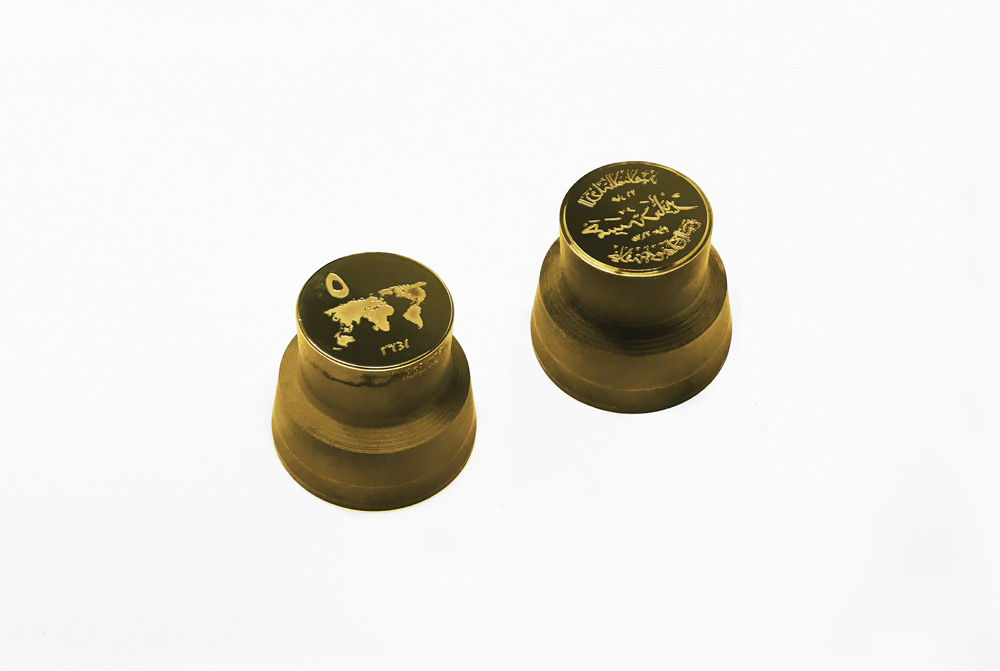
During our museum panel in Minneapolis, Felipe also discussed the project In God We Trust, his rather volatile addition to my exhibition that presented, again, a small materiality carrying a massive potential. The work consists of two golden dies that would theoretically be used to cast a new currency: the Islamic State Dinar, released in 2014 by Daesh/ISIS. The work caused a convulsion in the arts community, when it was presented in Chicago for the first time. It captured my imagination, not because of its potential, as gold would be too soft a material to cast coins, but because of the way these small objects triggered such a fierce reaction from intellectuals, who would otherwise champion the right of art to convey free speech.
In God We Trust, the title being a reference to the ideology that sustains monetary exchange in many national states, fabricated a sort of “reality principle” for an event perceived by the Global North as a civilizational threat: the establishment of a “rogue” state in the region of Al-Sham (the Levant). If Rivera Cusicanqui was calling out the selective politics of remembering within the national state, Felipe’s work tested the pulse on the selective application of international law and self-determination in the area of the Eastern Mediterranean, in a system dependent on the continuous transfer of wealth from the South to the North. It also tested the self-perception of an institutional artistic community, perceived and proclaimed as progressive, intellectually curious, and politically brave, but ultimately anxious about the world beyond its borders. In God We Trust became a testimony to how the status quo remains a decisive governing force, even in the most liberal communities of the West.
Hesitation is a skepticism for the proclamation of progress and freedom in a world still governed by the body reflexes of colonialism, and a resistance to the disconnection of the struggles of the oppressed through myths of the national. Colonial dispossession was mainly justified by claims of a racial difference and a cultural exceptionalism organized by geography. These ideas buttressed modern structures that perpetuate dispossession through trade, legislation, and ideological warfare, effectively becoming psycho-social coercion. Colonial racial hierarchies remain intact within the “post-colonial” nation state, but are now presented as natural or systemic to class disparity: generational wealth (obscuring its origin in racial violence and exploitation), individual genius myths (that conceal the precarisation, appropriation, coercion, and unpaid labour of racialised subjects), stigmatisation (of class, culture, gender, age, body normativity, and race), and appropriation of the commons by instrumentalising identity (the white and privileged appropriating traditional cultures or resources of others, justified on their shared national or regional origin).
In the past few years, I myself have been a victim of dispossession, coercion, and violence, a practice sustained by these very ideological scaffoldings; the nature of this operation is inextricably tangled in the naturalisation of social and racial difference within Abya Yala: the directionality of power, the prejudices attached to race and class, and the weaponisation of social institutions by the privileged. Paraphrasing Frantz Fanon’s reflections in The Wretched of the Earth, the coloniser and the colonised have long known each other, and since the coloniser derives its wealth and meaning from the colonial system, they see the colonised’s struggle for justice as an attack on their own integrity. In broad terms, they don’t recognise themselves in the absence of the rewards of exploitation, nor do they see those rewards as theft.
These procedures of dispossession, which are also a cover-up of the hollowed cultural identities within privilege, explain how some white Latin Americans may see precolonial heritage as their own while despising, ignoring, or exploiting the racialised heirs of the cultures that created that very heritage. Or how they perform othered identities abroad for professional or commercial gain, while upholding class pacts at home, and overlooking (perhaps not even grasping) the ethical implications of their actions.
I recently read that a racialised artist, who once told me during an interview, “I didn’t know I was indigenous until I got to the US,” got their house robbed in Oaxaca, because the affordable, non-gentrified neighbourhoods in the city are under assault, and to leave her house to work has become a risk. At the same time, a white Latin American artist who has been said to present themselves as indigenous in residency applications frequently occupies slots intended for racialised peoples in artistic programs and institutions across Europe and Abya Yala. Balzac has been famously misquoted as saying that “Behind every great fortune there is a great crime,” and the misquotation lies in the failure to point out that such a crime importantly implies a cover-up operation.
The epistemic violence underlying such dynamics is hardly new; famously, Jimmie Durham presented himself as a Cherokee and attached his work to that heritage, until the Indian Arts and Crafts Act of 1990 undermined his fiction; and more recently, a white Mexican artist casted a large sculpture inspired in Olmeca masks to be installed in a refurbished Californian museum, which rehearsed the condescending trope of giving a voice to the “voiceless.” These four episodes make me reflect on the hubris of white, privileged Latin American artist and how they see an escape to accountability in occupying (perhaps escaping to) international spaces that were meant for racialised peoples. But more importantly, it made me wonder how the fetishism of artistic and financial success still undermines any awareness of the oppression experienced by indigenous artists and communities today. This violence ideologically mirrors other forms of dispossession of racialised bodies and communities, like spoliation, intellectual and commercial property theft, or land appropriation.
.
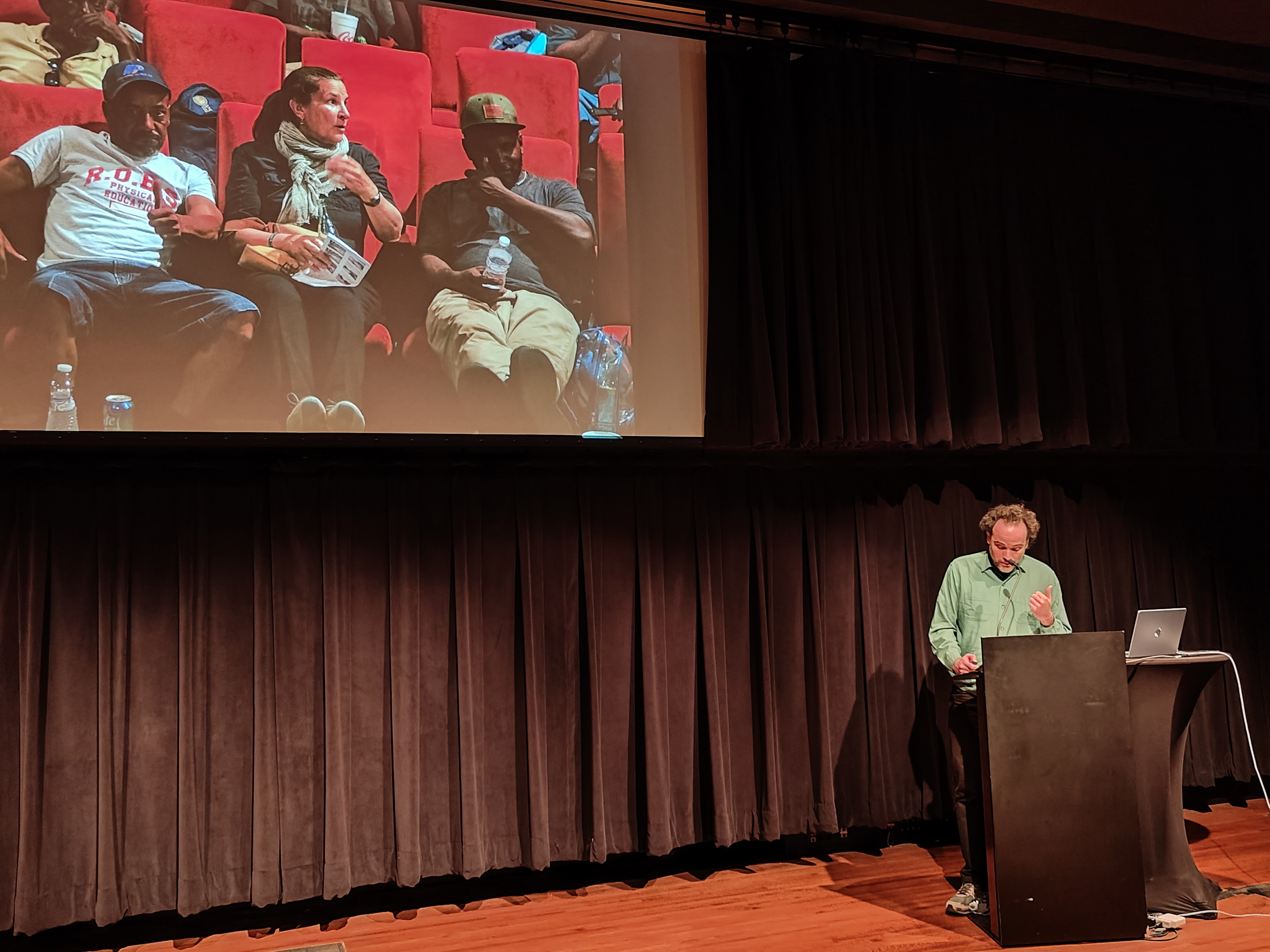
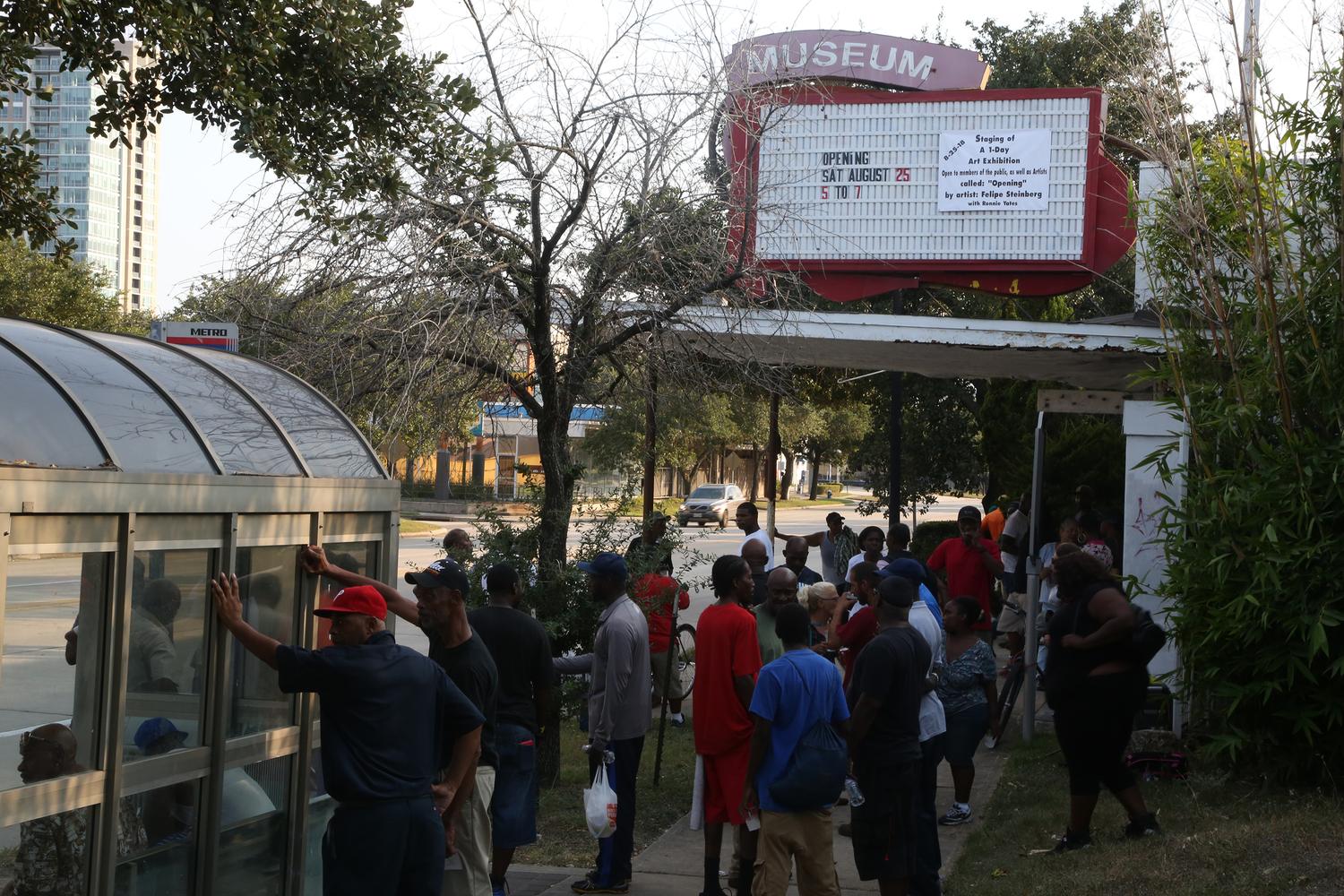
Felipe joined me in Minnesota to participate in a public panel on remaking museum histories, but he had already envisioned a second objective: the performance of a lecture piece called Opening, which he developed during his time at another residency, in Houston, Texas. Situated in the area surrounding the Playhouse Theatre, Opening presents Felipe’s research into the history of the Museum Park neighbourhood, organised through American-style urbanism, and later disrupted by the construction of the Interstate 69 Freeway cutting through the area. The lecture traces decades of urban development in connection to the emergence of the theatre in 1950 until its current semi-vacant state, an opportunity that Felipe capitalised for staging an artistic event in the space in 2018.
The Playhouse was arguably the first revolving circular stage in the United States, but it underwent multiple configurations over its lifetime. Opening highlights the emergence of the midtown Sears department stores, but also their decline, when the I-69 disconnected the area from its surroundings. The urban grid crossed by the freeway has been in slow decay ever since, and its fragmentation can be easily observed in its current inhabitation: the empty theatre, the deceased department store, and a nearby building repurposed by a major Houston museum to host artist residencies. Notably, there is a community of homeless individuals who live under the I-69 who perform temporary jobs for major companies to survive. A subsidiary of Amazon eventually set up near the encampment, to “facilitate the hiring process” of these individuals while charging them half of their wage for the service. This entire operation is one of the most absurd testimonies to the dreadful seams/sins of capitalism.
.
As a staple of Felipe’s work, Opening begins with a remarkably simple premise: occupying the theatre for an evening, by hiring the temporary workers for more than double their usual wage, demanding nothing except their presence. Later, in its lecture-performance configuration, Opening narrates the complex weave of interactions unfolding between history, urbanism, economy, class, and politics, using humour, wit, archival research, and a thoughtful acknowledgement of the actors involved in the project, all in equal measure. A text by Ronnie Yates, a poet, performer and artist working in Houston, observed that the 80 temporary workers hired for Opening were the largest constituency ever to experience a paid art commission sponsored by the City of Houston. Towards the end of his text, he remarked that this fact “makes the entire experience not just disorienting and very human, but somehow also delightful.”
Opening is a testimony to the severe fragmentation of social cohesion in the city, both as a product of large-scale urbanism and of the inherently cannibalistic nature of late-stage capitalism. This economic model preys on real estate speculation by keeping buildings vacant to inflate demand, while having people living in tents under the highway. Finally, it develops a strategy to “capture” the labour of the people who have been driven out of the housing system by creating subsidiary companies to choreograph a bureaucracy that circumvents and conceals their disenfranchisement. Felipe’s work even points to the complicity of cultural infrastructures in these procedures, by repurposing the budget of a museum-sponsored artistic project to carve a temporary, paid “break” for those who have been significantly left out of the rewards of the system but remain subject to its will.
Like the rotting sculpture back at Skowhegan, the decaying infrastructure of the theatre and other buildings of the midtown Houston area has become a model of the systematised destruction of culture, and like the burnt matchbox or the base of the Tribune Tower, it is also a model for the creation of capital directly from destruction. The abandoned Sears building has now been purchased by Rice University for the development of an “innovation hub,” an instrumental designation for the funnelling of corporate interest into the genetic code of higher education. The university plans to spend millions of dollars revamping the structure with the aid of a renowned architectural firm, pioneering the future occupation of the neighbourhood by large corporations. After listening to Felipe’s lecture, one can’t help but wonder how the people living under the bridge must feel.
Unlike abigarramiento, which is rife with contradictions but which also expresses the resilience of life, this particular kind of layering is a designed product akin to spoliation. The prosperity of real estate speculation depends on an effective uprooting of the displaced for their continuous repurposing; mainly, the undocumented migrant worker, but perhaps even some forms of digital nomadism. Neither can form worker unions, and both struggle to root, to form communities, and to preserve cultural practices. In this way, the culture and also the labour of the colonised can be appropriated as spolia, ultimately becoming part of the amalgam that the coloniser presents as their own culture.
Felipe’s practice engages in what I call hesitation, not only through the development of an artistic language that becomes cultural critique, but also through the forensic untangling of the procedures that weaponise destruction and erasure, for harnessing dispossession, appropriation, and displacement. I come back to the image of the Skowhegan Indian, its mouth torn by anonymous agents, its body rotting as a disappearing tribute to the displaced, the misunderstood, and the forgotten.
Rivera Cusicanqui thinks we’re currently undergoing a crisis of language, a situation that demands from oppressed peoples a rekindling of revolutionary imagination. The meaning of words has also become prey to these politics of fragmentation, and she wonders what terms like “decolonisation” can possibly mean when cast in the context of such disconnection. Hesitation might mean suspending the presumed centrality of the colonial gaze, allowing the alternative highlighted by I see you, you see me to offer a different outlook on our future. Perhaps a new title for the work can emerge from that perspective. And as Fanon reflects, that process of relieving oneself from colonial subjection is also a process of becoming, which in itself carries the motivation to keep striving for an awakening.
***
A small coda to this reflection on hesitation also comes from Silvia Rivera Cusicanqui’s generative thought. During a conference in Lima in 2024, she said that we must continue to make art, especially when facing oppression, because art is a refuge in the hardest times, and it nurtures a thought that goes well beyond art itself. She also speaks of some intellectuals as “closeted” artists, as they might be afraid that their ideas will not be taken seriously if not conveyed in the normative language of social sciences.
I find that notion amusing, because I was an artist first, but then I moved towards the ranks of academia, only to find my voice again in texts like this one, which is hardly a disciplined review, and more a stochastic, even spiralling visitation of consequential ideas against the light of personal histories.
At the same time, I recognise in some artists and curators the opposite impulse: their extractivist practice seems more akin to a “closeted corporatism.” In the absence of meaningful politics, they “traffick” with the thought of the racialised, moved more by the desire of professional and economic success than by the will to foster an encounter with ideas that can help sustain life and its expressions. This is a form of spoliation that needs to be examined under a different light than the Western trope of artistic appropriation, and more through the reflective untangling of colonial trajectories that enable dispossession and the epistemic violence that unnaturally extends the centrality of the colonial apparatus in a world that desperately needs otherwise.
.
[END OF PART V]
.
—David Ayala-Alfonso.
Minneapolis, MN and Mexico City, April-May 2026.
.
.
.
.
*Unless indicated otherwise, images are my own.
.
.
.
.
Sequences of Hesitation, Part V © 2026 by David Ayala-Alfonso is licensed under Creative Commons Attribution-NonCommercial-ShareAlike 4.0 International


.
.
.
.
.



You must be logged in to post a comment.